One Million Containers at Los Angeles Require a Terminal-to-DC Flow-Control Plan


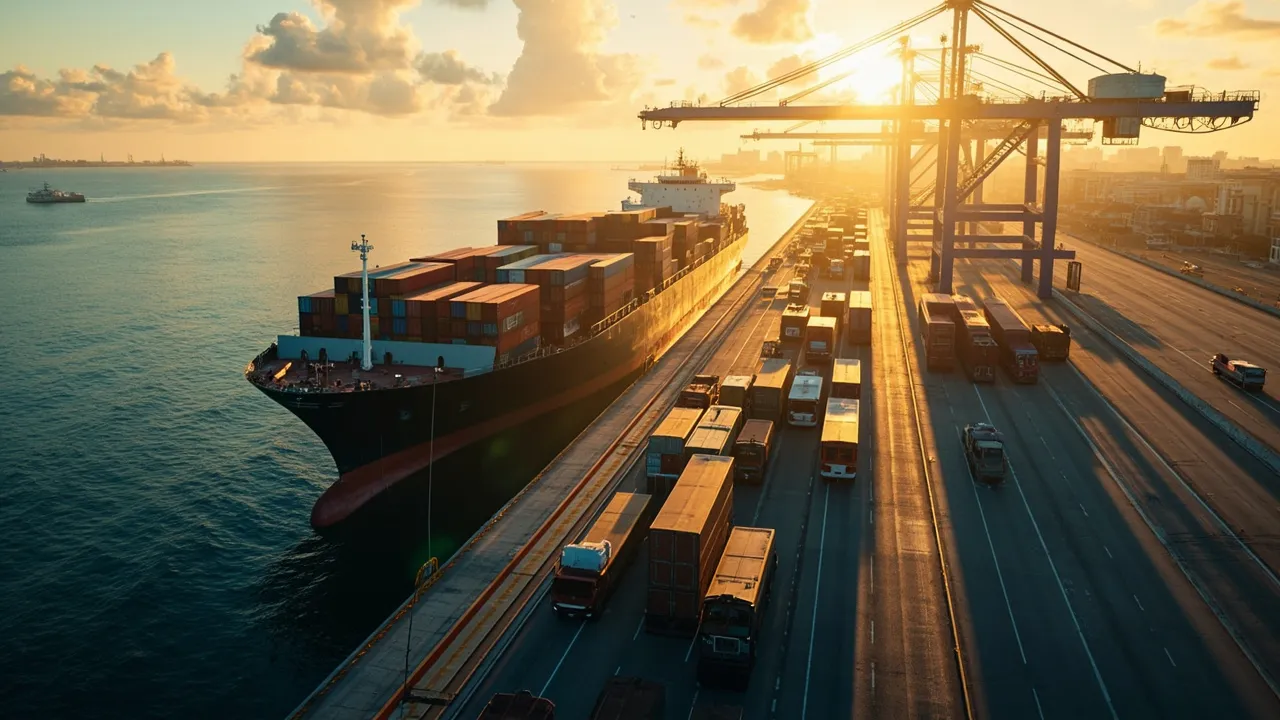
Record port throughput is good news only when the inland network can absorb it. A vessel can berth on schedule and a terminal can post strong crane productivity while importers still accumulate storage, chassis, detention, and warehouse costs. The operational test begins after discharge: can every container move through the terminal, onto the right inland mode, and into a distribution center without one constrained node slowing the entire chain?
That test became urgent in September. FreightWaves reports that the Port of Los Angeles handled a record 1,042,652 twenty-foot equivalent units, the busiest month in its 118-year history and more than 20,000 TEUs above the previous monthly record. Loaded imports reached 545,696 TEUs, up 19% year over year, while empty-container volume set another record at approximately 371,206 TEUs.
Those numbers demonstrate port capability. They do not guarantee importer velocity. Shippers need a terminal-to-distribution-center flow-control plan that balances discharge, availability, appointments, chassis, rail, trucking, and receiving capacity every day.
Convert the Monthly Record Into a Daily Capacity Test
Nearly 3 million TEUs moved through Los Angeles from July through September, the port's busiest quarter. Almost 4 million TEUs moved during the four months beginning in June. A sustained run matters more operationally than a single peak because it leaves fewer recovery days for terminals, carriers, transloaders, and distribution centers.
Start with a rolling 14-day view by vessel and container. For each arrival, forecast discharge volume, terminal availability date, free-time expiration, required pickup appointments, likely chassis demand, planned inland mode, and destination receiving slots. Convert those events into daily demand by terminal and destination rather than managing one aggregate import forecast.
The control question is simple: does downstream capacity equal containers becoming available? If 600 containers are expected to become available Tuesday but confirmed drayage, rail, and warehouse capacity covers only 450, the team has a 150-container exposure before the terminal gate opens. That gap needs an owner and a recovery action—not another dashboard refresh.
Reconcile Six Constraints Every Morning
A useful daily control meeting should reconcile six linked capacities:
- Terminal availability: containers discharged, customs-released, placed in accessible stacks, and approaching last free day.
- Appointment supply: pickup windows by terminal, shift, carrier, and move type.
- Chassis supply: confirmed units, pool restrictions, street-turn opportunities, and out-of-service equipment.
- Drayage and rail capacity: driver shifts, dual-transaction opportunities, train cutoffs, and rail billing status.
- Transload and DC receiving: doors, labor, yard space, unloading rates, and purchase-order readiness.
- Empty return capacity: valid return location and appointment before equipment detention begins.
These cannot be planned independently. Booking more drayage pickups when a DC yard is full simply transfers congestion from the terminal to the street. Holding containers for a warehouse slot may consume free time and reduce terminal fluidity. Sending a driver without a valid empty-return path can strand equipment and make the next import move impossible.
The scale also changes the mix. September's loaded imports represented only about 52% of total throughput, while empty containers represented roughly 36%. An effective plan therefore pairs inbound pickups with empty returns whenever terminal rules and equipment ownership allow. Round-trip design is a capacity lever, not an administrative afterthought.
Set Early-Warning Thresholds Before Charges Accrue
Do not wait for demurrage invoices to reveal a flow problem. Use thresholds that trigger action while options remain.
For truck moves, flag containers not assigned to a carrier within 24 hours of availability, without an appointment 48 hours before last free day, or still on terminal after three days. That three-day ceiling is grounded in current operating logic: FreightWaves reported that keeping truck dwell below three days reduces pressure on terminal yards and helps preserve appointment and chassis availability.
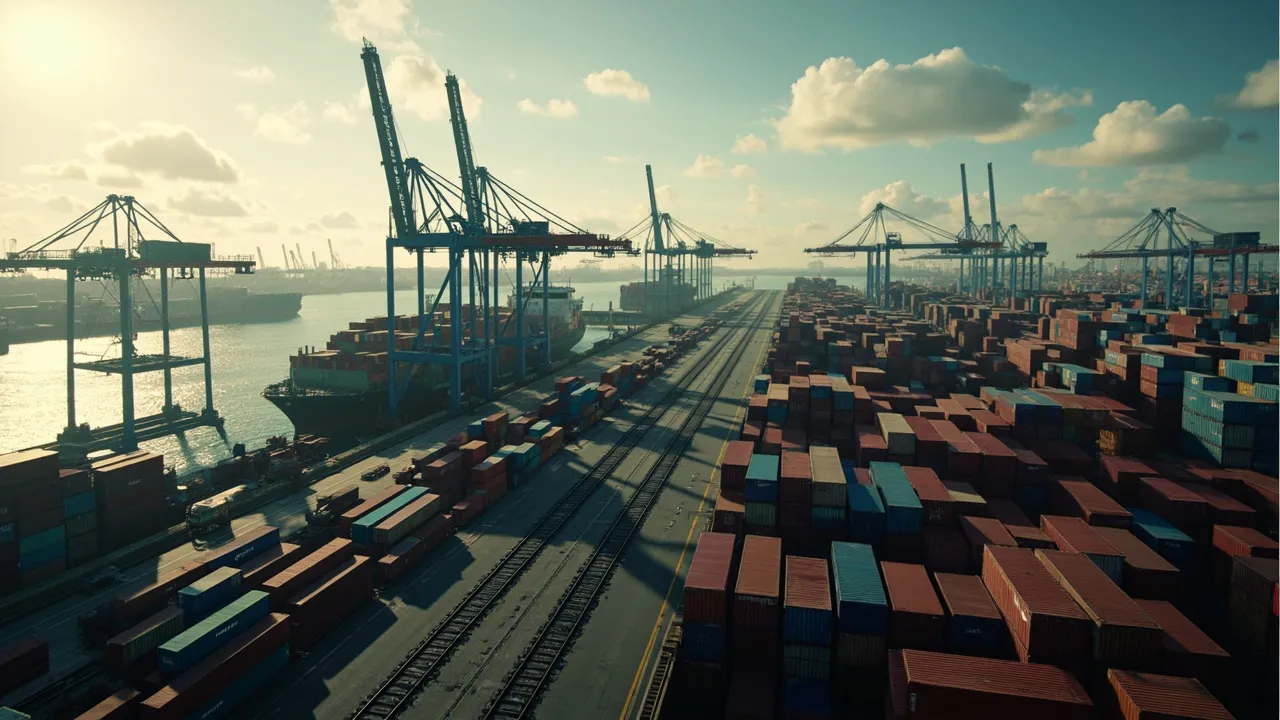
Rail cargo needs separate controls because a healthy truck average can conceal a growing on-dock rail queue. Flag containers without complete billing before discharge, those that miss a planned train, and any lane whose dwell exceeds its recent baseline. Earlier congestion showed how far rail dwell can diverge: FreightWaves reported average on-dock rail dwell of 6.5 to 8.5 days in late 2024, versus a port goal of four days and a pre-pandemic range of two to three.
At the DC, monitor projected yard occupancy, trailer or container turns per door, unloading backlog, and receiving schedule adherence. Escalate when forecast occupancy exceeds a defined buffer—such as 85%—or when inbound appointments exceed the building's demonstrated daily unloading capacity. The precise threshold should reflect the facility, but it must be set before volume arrives.
Manage Exceptions by Cost and Recoverability
When capacity falls short, prioritize containers using more than arrival order. Combine last free day, demurrage rate, customer commitment, product criticality, inventory position, appointment scarcity, and recovery options into an exception score.
A container with one day of free time remaining, no substitute inventory, and a firm customer allocation should outrank freight with five free days and healthy stock. Conversely, a high-cost container should not displace critical material automatically if a rail move, off-dock yard, or revised receiving window offers a cheaper recovery path.
Give every exception an action, owner, deadline, and financial exposure. Typical actions include extending a DC shift, redirecting to a secondary facility, securing a peel-pile arrangement, changing from rail to truck, using an approved off-dock yard, or negotiating additional free time before arrival. Measure prevented charges and restored velocity, not merely the number of alerts closed.
Use One Operating Picture From Vessel to Receiving Door
Record throughput can mask node-level congestion because each participant sees a different slice of the move. The terminal sees yard inventory, the broker sees customs status, the drayage carrier sees appointments, the rail operator sees billing and train plans, and the warehouse sees door capacity.
A transportation management platform should unite those milestones around the container and purchase order. Teams need predicted availability, holds, last free day, appointment status, driver assignment, chassis plan, gate events, rail departure, arrival forecast, receiving slot, empty return, and accrued cost in one workflow. The system should recalculate risk whenever an upstream event changes.
Los Angeles proved that it can process extraordinary cargo volume. Importers now have to prove that their inland networks can do the same. The right response to one million TEUs is not celebration or panic; it is disciplined flow control across every handoff between ship and shelf.
Ready to coordinate terminal, drayage, rail, and receiving capacity in one operating view? Request a CXTMS demo to see how milestone visibility and exception workflows can protect container velocity.