Kimberly-Clark’s Alternative Fiber Pilot: A New Model for Raw-Material Resilience

Kimberly-Clark is testing more than a new plant fiber in Yuma, Arizona. It is testing a different way to manage raw-material risk.
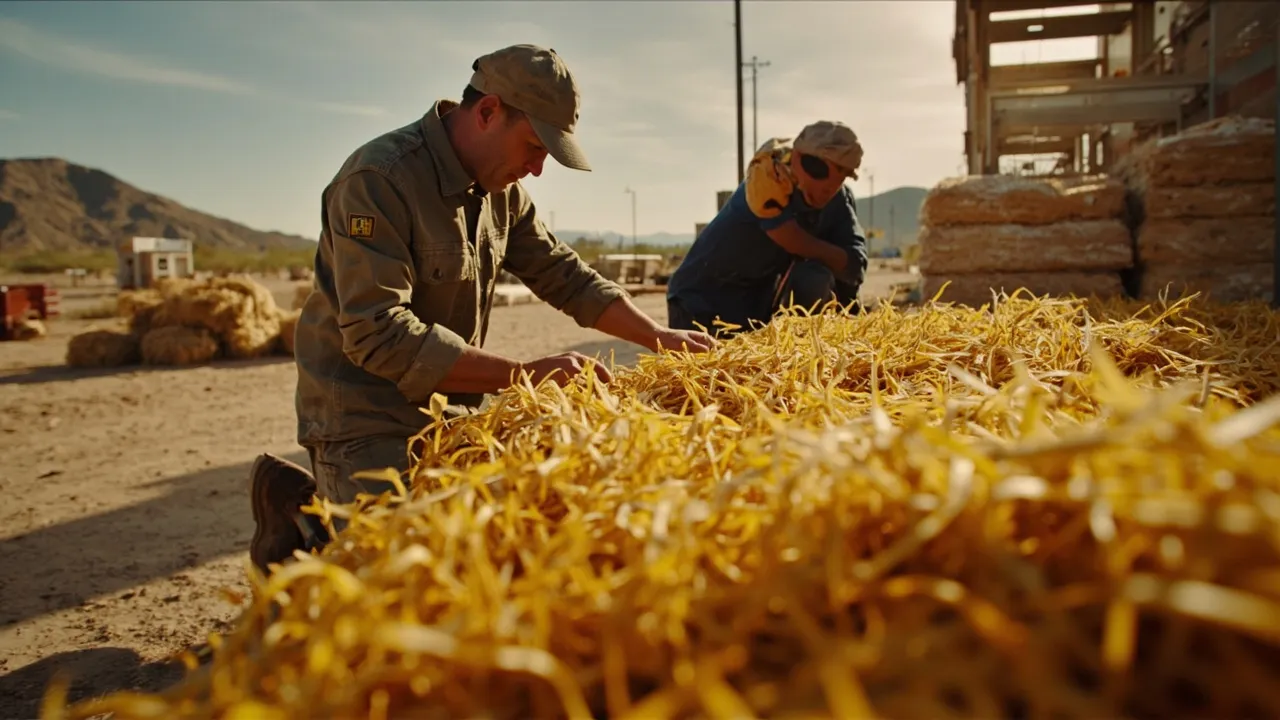
The consumer-products manufacturer has launched an alternative natural fiber program centered on hesperaloe, a succulent that could provide fiber throughout the year. A pilot facility in Yuma will evaluate whether the material can work in hygiene products. According to Supply Chain Dive, the program is intended to reduce exposure to natural forest fiber cost volatility while advancing the company’s sustainability ambitions.
That makes the pilot relevant far beyond pulp and paper. It illustrates how procurement, transportation, inventory, quality, and traceability must work together before an alternative input can become a dependable part of a production network.
Resilience starts with a usable second source
An alternative material creates resilience only when it can be supplied at the required volume, converted reliably, and delivered at a competitive landed cost. A laboratory success does not satisfy those conditions.
Hesperaloe offers an intriguing sourcing profile because Kimberly-Clark has identified it as a potential year-round fiber source. A dependable growing cycle could reduce the seasonal variability that complicates supply planning. Locating the pilot in Yuma also puts processing close to cultivation, potentially avoiding the cost and damage risk of transporting bulky, unprocessed biomass over long distances.
The strategic aim is optionality. Natural forest fiber does not need to disappear for an alternative to be valuable. A qualified second source can give buyers leverage when pulp prices rise, a producing region is disrupted, or sustainability requirements tighten. It can also let planners allocate different fiber blends by product, plant, or market instead of applying one sourcing formula across the network.
The initiative sits inside a much larger operational transformation. Supply Chain Dive reports that Kimberly-Clark launched a five-year, $3 billion productivity enhancement program in 2024. The company also completed the global deployment of a unified procurement platform in the first half of 2026, with 90% of suppliers participating. Those digital foundations matter because a new material creates more specifications, suppliers, transactions, and exceptions to control.
New fiber means new logistics assumptions
Switching raw materials is not merely a procurement event. It changes the physical network.
Hesperaloe fiber may differ from forest fiber in moisture sensitivity, density, bale dimensions, storage life, or processing yield. Each difference affects transport economics. A low-density load can cube out a trailer before reaching its weight limit. Excess moisture can create quality claims. Variable yield can make a seemingly inexpensive input costly per unit of finished output.
Before scaling, the pilot should establish a logistics baseline for:
- Harvest and processing calendars, including expected weekly volume
- Inbound load density, packaging format, handling requirements, and damage rates
- Lane distance from field or processor to each consuming plant
- Storage conditions, shelf life, safety stock, and lot-segregation rules
- Conversion yield and waste by supplier lot
- Return, rejection, and disposal processes for nonconforming material
These variables belong in the landed-cost model. Purchase price alone can conceal extra miles, specialized equipment, storage losses, or lower production yield. The useful comparison is cost per acceptable unit of finished product, including freight, handling, inventory carrying cost, conversion loss, and quality failure.
Supplier qualification needs four gates
A disciplined pilot should use explicit gates rather than an open-ended promise to scale if results “look good.” Four gates provide a practical framework.
1. Quality and performance
Fiber must meet documented specifications for strength, absorbency, cleanliness, consistency, and compatibility with production equipment. Trial lots should be tied to test results and finished-goods outcomes. Acceptable average performance is not enough; variability between harvests and lots must also remain within tolerance.
2. Landed cost
The business case should model multiple volumes and operating conditions. Costs at pilot scale can be misleading, but so can optimistic assumptions about full utilization. Buyers should stress-test fuel prices, agricultural yield, freight capacity, processing downtime, and rejection rates. A resilient source must remain viable under plausible disruption scenarios, not only under a perfect forecast.
3. Supply reliability
Planners need evidence that growers and processors can deliver the committed quantity in the required windows. That means measuring on-time, in-full performance, lead-time variability, recovery from missed harvests, and the availability of alternate transport capacity. Inventory policy should reflect observed variability rather than borrowing safety-stock settings from conventional pulp.
4. Sustainability and custody
Environmental value must be measurable. The program needs agreed methods for tracking land and water use, energy consumption, processing waste, and transport emissions. It also needs proof that every received lot originated from an approved grower and passed through approved processing steps. Without that chain of custody, sustainability claims become difficult to audit and defend.
Shipment-level traceability connects the gates
The control tower for alternative sourcing is not a dashboard alone; it is the transaction trail connecting material identity to physical movement.
Each lot should receive a persistent identifier at harvest or first processing. Purchase orders, quality certificates, bills of lading, carrier milestones, receipts, inventory locations, and production consumption should reference that identifier. Planners can then answer operational questions quickly: Which finished batches used a specific harvest? Did heat exposure or dwell time correlate with a quality failure? Which lanes generated the most damage? How much approved inventory is available at each plant?
A transportation management system strengthens this record by capturing shipment events and costs at the load level. When integrated with procurement, quality, and manufacturing systems, it lets the organization compare suppliers using the full outcome: material quality, delivered cost, service reliability, and verified custody.
This is where a controlled pilot becomes a repeatable sourcing model. Kimberly-Clark’s Yuma project can generate the evidence needed to decide whether hesperaloe should remain a niche input, serve as contingency capacity, or scale across products and plants. The same framework applies to recycled resins, bio-based packaging, low-carbon steel, and other alternative materials.
Raw-material resilience is built by qualifying options before a crisis makes them necessary. The companies that connect sourcing experiments to transportation data, inventory policy, and auditable chain of custody will be able to scale those options with far less risk.
Ready to connect alternative-material sourcing with shipment visibility and landed-cost control? Request a CXTMS demo to see how one platform can manage the transportation data behind a more resilient supply network.