GlobalFoundries' $21B Fab Plan Needs a Construction-to-Production Logistics Bridge

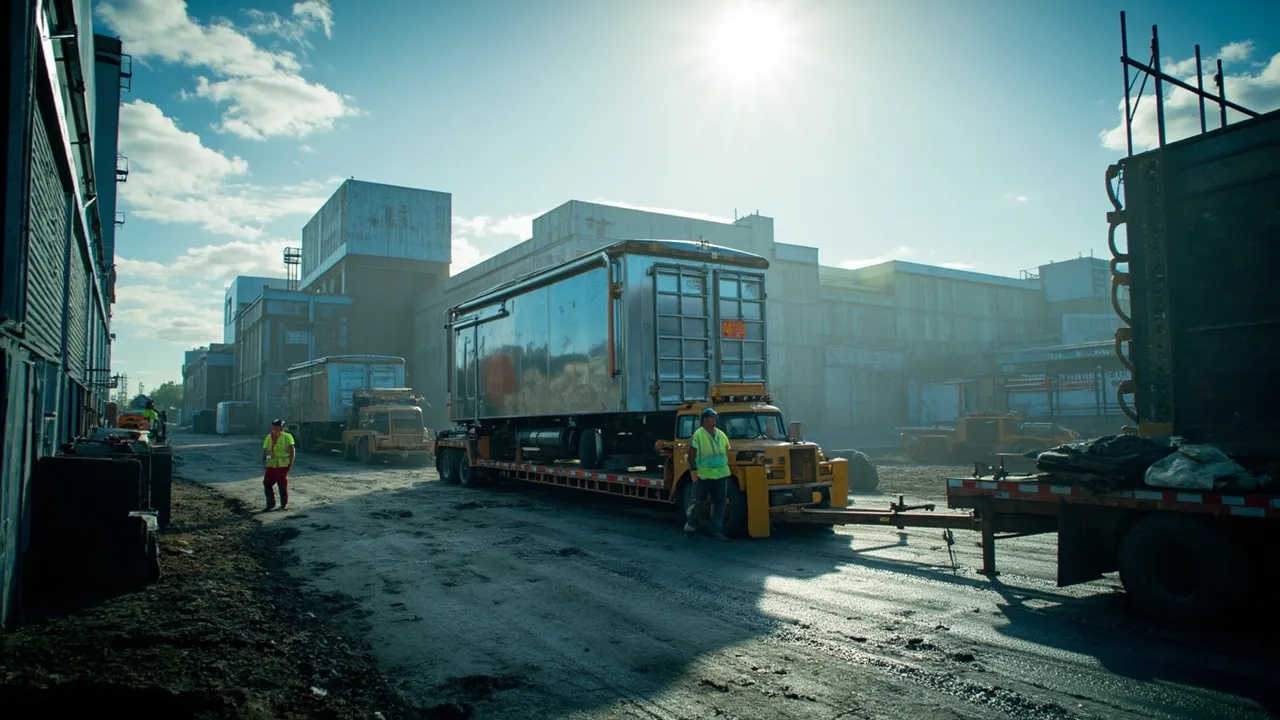
GlobalFoundries' planned expansion in Malta, New York, is more than a construction program. It is a controlled handoff between two very different supply chains: a temporary network built to move structural materials and highly sensitive manufacturing tools, followed by a permanent network that must replenish a live semiconductor operation without interruption.
Supply Chain Dive reports that Japan will provide up to $21 billion for two new fabs under a U.S.-Japan trade initiative. The first 300mm fab is expected to break ground in 2026 and open in 2029. At full operation, each facility is expected to add approximately 900,000 300mm wafers of annual U.S. capacity, while the overall project is expected to create more than 1,000 skilled manufacturing jobs.
Those numbers make schedule control strategically important. A building can be substantially complete while the manufacturing system inside it remains months away from reliable output. The logistics plan therefore cannot stop at construction completion; it must connect every inbound movement to commissioning, qualification, and production-readiness milestones.
Treat the project as two linked networks
During construction, freight is irregular and milestone-driven. The mix includes steel, concrete, piping, electrical systems, cleanroom components, bulk utility equipment, and oversized production tools. Loads may require permits, escorts, cranes, temporary staging areas, and tightly reserved installation windows.
Production logistics has a different rhythm. Once the fab ramps, repeatability matters more than one-time lifting capacity. Wafers, specialty gases, chemicals, spare parts, filters, protective packaging, and maintenance consumables must arrive under strict quality, security, and traceability controls. Some inputs are hazardous; others are vulnerable to contamination, vibration, temperature excursions, or delays measured in hours rather than days.
Managing those networks separately creates a dangerous gap. Temporary access roads, laydown yards, docks, and carrier procedures may disappear before permanent lanes are tested. At the same time, production suppliers can appear “ready” in a procurement system even though their packaging, transport, customs, or site-delivery processes have never completed a live trial.
The bridge is a single milestone plan that shows when construction flows end, when commissioning flows peak, and when each production lane becomes operational.
Sequence freight against commissioning gates
Start with the integrated commissioning schedule, then work backward to the last responsible delivery date for every critical item. Each shipment should be tied to a physical dependency rather than a generic requested date.
For production tools, that sequence may include foundation acceptance, cleanroom-zone release, utility availability, rigging access, tool move-in, hook-up, calibration, process qualification, and customer approval. A tool delivered before its zone is ready consumes scarce protected storage and increases handling risk. A tool delivered late can idle installation crews and push every dependent qualification activity.
Create a logistics record for each critical tool containing its dimensions and weight, shock and tilt limits, origin readiness, route survey, permits, crane and rigging booking, receiving window, installation owner, and fallback storage plan. Critical-path tools should have checkpoint reporting from factory release through final positioning—not just an estimated arrival date.
Apply the same logic to cleanroom materials and facility systems. McKinsey's review of U.S. fab construction highlights shortages in materials such as polyvinylidene fluoride piping and notes that fragmented construction sites add logistics and quality-control complexity. Long-lead materials need committed production slots, inspection gates, and arrival dates synchronized with the crews that install them.
Give hazardous inputs a separate readiness gate
Specialty gases and process chemicals should not enter the normal inbound plan merely because their suppliers are under contract. Before first delivery, validate permits, approved containers, safety data, carrier qualifications, emergency response procedures, compatible unloading points, storage capacity, and the site's ability to consume or safely hold the material.
Run a tabletop exception before go-live: a delayed tanker, rejected seal, unavailable dock, or failed quality test. The response should identify who stops the movement, where the load waits, which substitute inventory is available, and when production planning must be alerted. That turns compliance from a document check into an executable operating process.
Convert temporary routes into repeatable lanes
At least six months before planned production, classify every inbound flow as temporary, transitional, or permanent. Then assign an explicit retirement or activation date.
A construction gate may handle oversized equipment well but interfere with employee traffic after staffing increases. A laydown yard may be ideal for staged tool moves but unsuitable for regulated chemical inventory. A carrier selected for project cargo may lack the equipment, cadence, or digital connectivity required for daily replenishment.
Permanent lanes need trial shipments before the first production lot depends on them. Test appointment booking, security clearance, packaging and label scans, proof of delivery, quality holds, empty-container returns, and escalation contacts. Where an international supplier is involved, include customs documents and broker handoffs in the trial. A lane is ready only when the physical movement and its data trail both complete successfully.
Supplier qualification should therefore have three statuses: commercially approved, technically qualified, and logistics ready. Only the third confirms that the correct material can reach the correct point of use at the required cadence.
Measure readiness with operational metrics
A compact control tower should track four measures through the transition:
- Milestone delivery reliability: critical shipments arriving within the window tied to their installation or commissioning dependency.
- Critical-tool dwell: elapsed time from site receipt to move-in and from final positioning to hook-up acceptance.
- Supplier lane readiness: percentage of launch-critical suppliers that have completed an end-to-end trial with no unresolved exception.
- Production-input coverage: verified days of usable supply by material, adjusted for quality holds, storage limits, and consumption during ramp.
Add exception aging and recovery ownership to each metric. An amber status without a named owner, next action, and decision deadline is merely decoration.
Make the handoff a managed event
The transition from construction to production should have formal entry and exit criteria. Construction logistics can stand down only after permanent receiving locations are operational, production carriers are qualified, critical suppliers have passed lane trials, and contingency stock or alternate routes are in place. Keep selected project-logistics capability available through the heaviest tool-installation period; commissioning rarely follows a perfectly clean boundary.
GlobalFoundries' capacity target makes the payoff substantial, but capital alone does not produce wafers. The operating network must be commissioned alongside the building. By connecting project cargo, tool installation, supplier readiness, and repeatable inbound lanes in one milestone view, teams can identify the next constraint before it becomes a missed ramp date.
Preparing a complex manufacturing launch? Request a CXTMS demo to coordinate project shipments, supplier milestones, and production-ready transportation lanes in one workflow.