EU-Mexico Trade Momentum: Build a Lane Qualification Before Sourcing Shifts

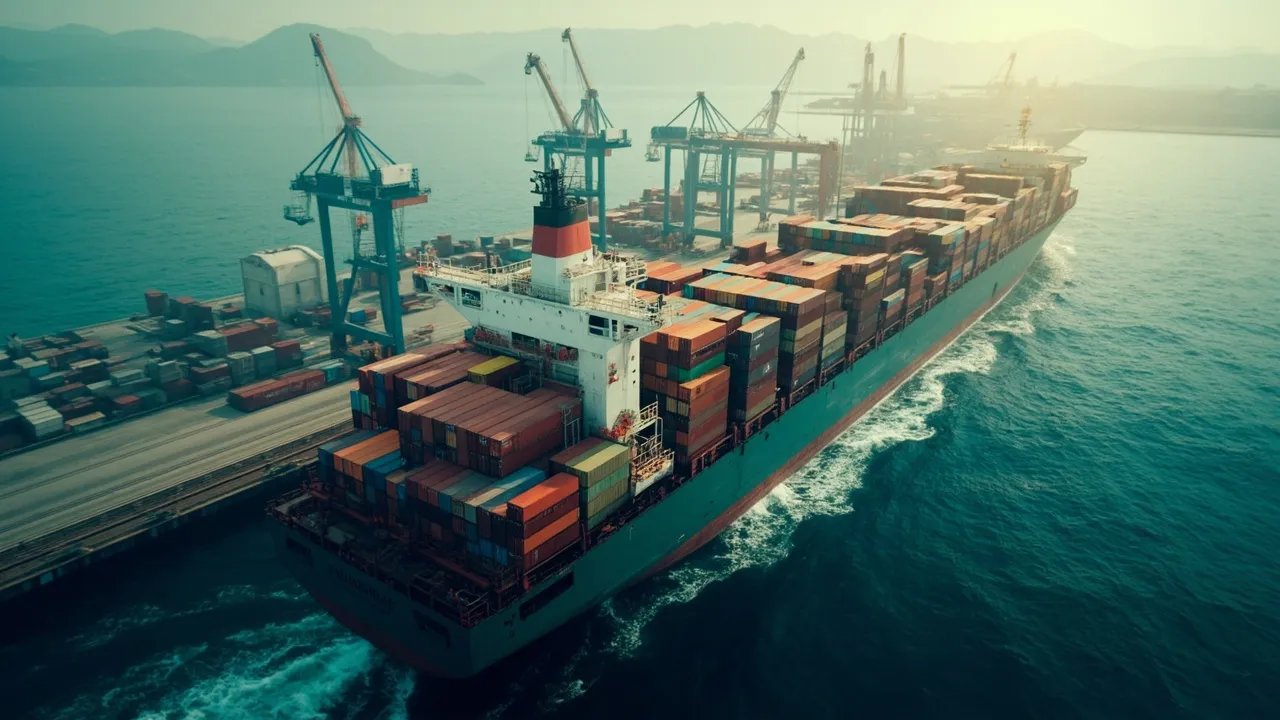
EU-Mexico trade is moving from an interesting diversification idea to a corridor that supply chain teams must evaluate seriously. The commercial case is strengthening as tariff uncertainty complicates access to the United States and businesses on both sides of the Atlantic look for additional markets and suppliers. But a promising trade agreement is not the same thing as a dependable logistics lane.
The scale already warrants attention. Reuters reported that EU-Mexico trade reached about €86 billion in 2025, an increase of 75% over a decade. Transport equipment, machinery, chemicals, fuels, and mining products dominate the exchange—categories where late arrivals, handling failures, and incomplete documentation can quickly become expensive.
The modernization of the EU-Mexico agreement adds momentum. According to Reuters, Mexico's economy ministry estimates that Mexican exports to the EU could rise from roughly $24 billion annually to $36 billion by 2030, while the EU currently exports about $65 billion in goods to Mexico each year. Those projections should trigger lane qualification—not an immediate sourcing commitment.
Translate trade policy into physical flows
Start with the actual product, origin, destination, and service promise. A tariff reduction can improve landed cost while the wrong gateway, sailing pattern, or inland connection erases the benefit.
For Mexico, candidate gateways may include Veracruz or Altamira for Atlantic services and Manzanillo or Lázaro Cárdenas when network design favors Pacific routings or transshipment. The correct choice depends on supplier location, destination market, carrier service, rail and truck connectivity, congestion patterns, and the availability of specialized handling. In Europe, the largest port is not automatically the best port; proximity to the final plant, feeder schedules, customs capabilities, and inland capacity may favor another gateway.
Map each candidate corridor as a chain of operational legs:
- Supplier pickup and origin consolidation
- Export clearance and terminal receiving
- Ocean service, including any transshipment
- Destination terminal and import clearance
- Inland rail or truck movement
- Final delivery and empty-equipment return
Assign an expected duration, variability range, cost, owner, and evidence milestone to every leg. This reveals whether a proposed 24-day service is a repeatable door-to-door promise or merely the port-to-port time from a carrier schedule.
Test documentation before testing speed
The updated agreement is expected to make practically all goods trade duty-free, although some agricultural products remain subject to quotas. Preferential treatment still depends on correct classification, origin evidence, and compliance with the applicable rule of origin. A buyer should not place savings in a business case until a customs specialist validates the product's tariff code, origin rule, proof requirements, and any quota or licensing constraint.
Build a document matrix for each product and direction of travel. It should identify the commercial invoice, packing list, transport document, origin statement, permits, sanitary or phytosanitary certificates, dangerous-goods paperwork, and broker instructions. Give every document a responsible party and a deadline tied to a shipment milestone.
This is especially important during a sourcing shift. A new supplier may produce the right component but lack the systems and discipline to create compliant origin data at scale. A missing statement discovered after arrival can turn forecast duty savings into storage, demurrage, rework, and delayed production.
Score lanes on variability, not averages
Average transit time hides the risk that matters to production planners. Compare candidate lanes using the median, 80th percentile, and worst credible door-to-door duration. Include cut-off misses, rolled bookings, transshipment delays, customs exams, port congestion, inland equipment shortages, labor disruption, and severe weather.
A useful qualification scorecard should cover:
- Landed cost: freight, fuel, terminal handling, customs, duty, insurance, inventory carrying cost, and expected exception expense
- Service reliability: schedule frequency, historical variability, transshipment exposure, and recovery options
- Capacity: supplier output, origin trucking, container and special-equipment availability, vessel space, and destination drayage
- Compliance: classification confidence, origin documentation, licensing, broker readiness, and product-specific controls
- Resilience: alternate gateways, carriers, modes, and the time and cost required to activate them
Do not collapse the score into a single number too early. A lane with the lowest expected cost but only one weekly sailing and no practical recovery route may be unsuitable for a production-critical component.
Run pilots with explicit pass criteria
Use pilot shipments to replace assumptions with evidence. Send enough loads to encounter normal operational variation; one successful container proves very little. Before the first booking, define pass criteria for total lead time, cost variance, documentation accuracy, milestone completeness, damage, customs release, and delivery performance.
Capture milestone timestamps from purchase-order readiness through final delivery. Planned and actual dates should be recorded for cargo availability, pickup, terminal gate-in, vessel departure and arrival, customs release, out-gate, and proof of delivery. Record exceptions with reason codes rather than free-text notes so the team can distinguish supplier delay from carrier, port, customs, or inland failures.
Review the pilot as a cross-functional decision. Procurement can confirm supplier performance and price; logistics can assess capacity and variability; customs can validate preferential treatment; finance can reconcile landed cost; and sales or operations can decide whether the measured service supports customer promises.
Promote the corridor in stages
A qualified lane should move through controlled stages: test, limited production, approved, and scaled. Set volume caps and review dates for each stage. Establish triggers that force requalification, such as a gateway change, new transshipment point, material tariff update, supplier relocation, repeated customs holds, or a sustained deterioration in schedule reliability.
The same discipline should apply to contingency options. Price an alternate port, carrier, and airfreight recovery plan before disruption occurs. Store the routing, contacts, documentation requirements, and approval thresholds in the transportation workflow so an emergency option is executable rather than theoretical.
CXTMS connects sourcing decisions to routings, bookings, documents, milestones, costs, and exceptions in one operational record. That makes it easier to compare pilot evidence with the assumptions behind a new EU-Mexico corridor—and to scale only when the lane earns confidence. Request a CXTMS demo to build repeatable lane-qualification workflows before your next sourcing shift.