Driverless Trucks Meet Weigh Stations: Put Inspection Clearance Into the Dispatch Record

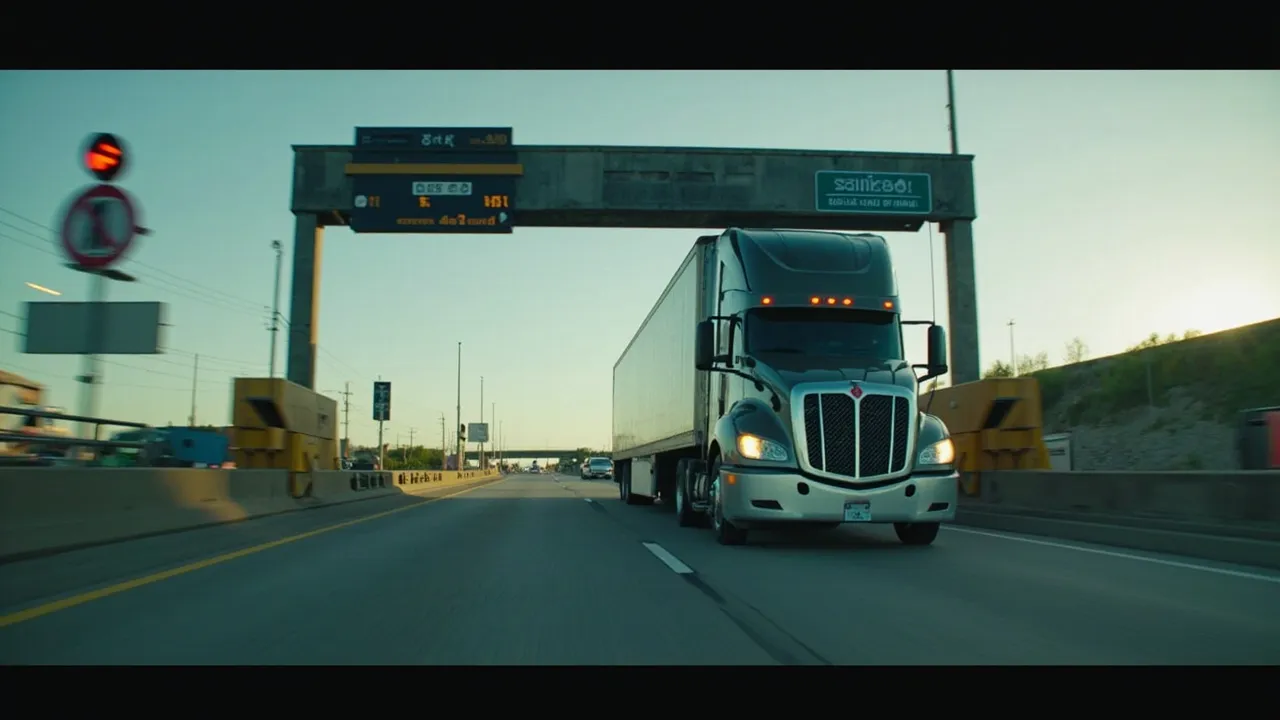
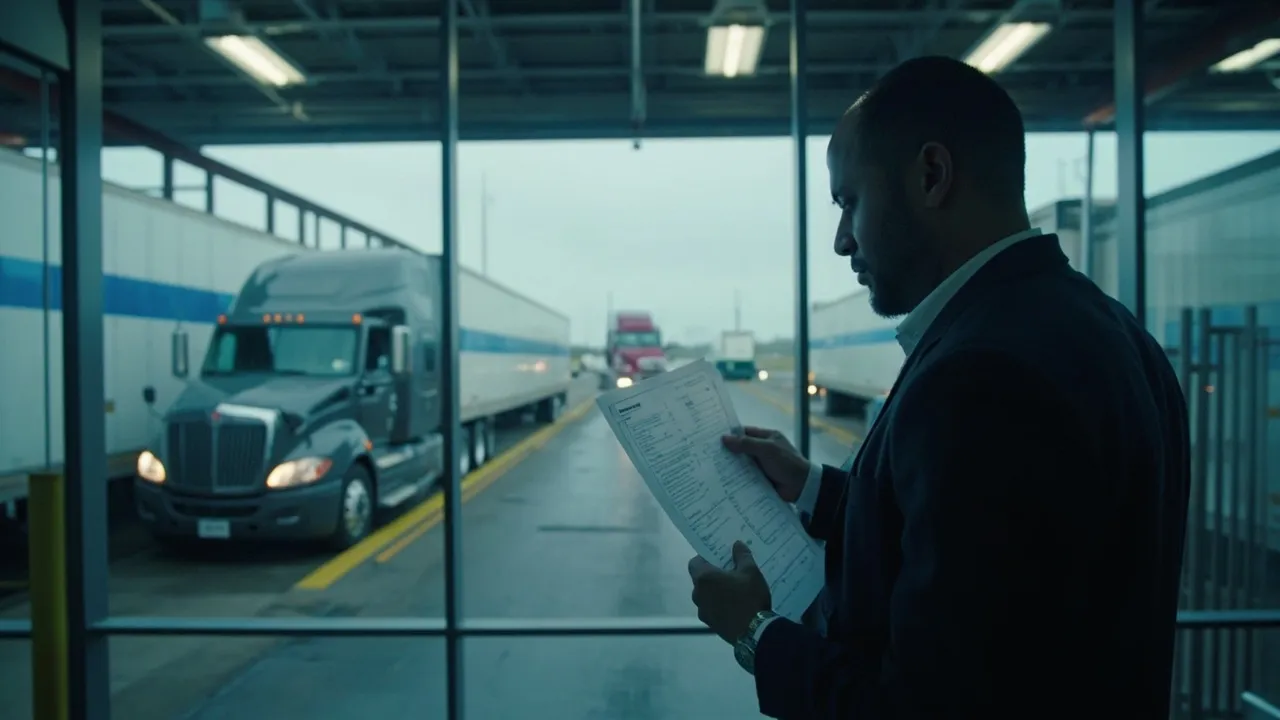
A driver normally provides the human bridge between a truck and roadside enforcement. The driver receives a bypass signal, follows a pull-in order, answers an inspector, presents credentials, and responds when a defect takes the vehicle out of service. Remove the person from the cab and those duties do not disappear. They become data and workflow requirements.
That is why weigh-station clearance belongs in the dispatch record for every driverless movement. It cannot live only in the autonomous-driving stack or a bypass provider's system. The transportation operation needs to know whether the truck, trailer, inspection, route, and remote-support plan form a legally executable trip before freight leaves the yard.
Existing Roadside Systems Are Becoming the Interface
Kodiak AI and PrePass have begun routing autonomous-truck safety inspection records into the roadside screening systems used by Texas and Louisiana. According to FreightWaves' report on the collaboration, enforcement personnel verify the information and retain authority over the bypass decision. They can also send additional instructions to the vehicle operation.
The clearance is based on the Commercial Vehicle Safety Alliance's Enhanced Commercial Motor Vehicle Inspection Program. A CVSA-trained inspector verifies that the autonomous vehicle is free of safety defects before driverless operation; the clearance remains valid for up to 24 hours. PrePass says its bypass network spans 581 North American sites, suggesting that this is not merely a one-corridor integration problem.
An earlier Texas pilot shows the process has operational depth. FreightWaves reported that Kodiak and a connected-truck service conducted about 200 bypass tests using four trucks. The enhanced-inspection regime also requires an inspector to complete a 40-hour CVSA training course and pass an exam. A truck operating 20 to 22 hours per day therefore needs a fresh inspection as a daily dispatch dependency, not an occasional compliance attachment.
Model the Missing-Driver Workflow
A conventional bypass event looks deceptively simple: a device signals bypass or pull in, and the driver complies. Driverless operations need an explicit state machine.
The record should distinguish at least five states: clearance received, clearance verified, bypass authorized, pull-in ordered, and enforcement interaction resolved. Each transition needs a timestamp, location, source system, vehicle identifier, trailer identifier, route or load identifier, and the message received. A green bypass cannot be inferred from the existence of an inspection certificate; the state makes the decision.
When enforcement orders the truck to enter a facility, the workflow must identify how the automated driving system reaches the inspection lane, who can communicate with the officer, and what happens if a physical action would normally require a driver. Remote support contact details must be available before the trip, with escalation paths for loss of communications, conflicting instructions, or a vehicle unable to reach the designated safe location.
The enforcement agency remains the decision-maker. A dispatch system should never convert “eligible for screening” into “guaranteed bypass.” Instead, it should preserve the instruction exactly as received and show whether the truck acknowledged and executed it.
Put Four Evidence Blocks in the Dispatch Record
The operational record needs more than a PDF certificate. It should hold four structured evidence blocks.
1. Credentials
Record the motor carrier, operating authority, vehicle registration, insurance status, permits, autonomous-system authorization, and inspection-provider credentials. Include effective and expiration times. A valid document with an expired timestamp is not a valid dispatch condition.
2. Vehicle and Trailer State
Bind the clearance to the exact tractor, automated-driving system configuration, trailer, and load. Capture the inspection result, open defects, repair disposition, sensor-health status, and any equipment swap after inspection. This binding matters because the tougher standard exposes defects that routine processes can miss. In a separate review, FreightWaves found that more than 1,000 enhanced inspections identified 525 defects; 95% were on trailers, and trailers passed enhanced inspections only 59% of the time versus 70% under traditional inspection.
3. Remote-Support Responsibility
Name the active remote-support team, contact channel, coverage window, escalation owner, and response-time target. The record should confirm that coverage extends through the planned route and expected arrival, not merely through departure. A remote-support roster that ends before the load does is a route failure waiting to happen.
4. Immutable Clearance Events
Store the issuing party, inspection time, validity window, cryptographic or provider reference, screening request, state response, vehicle acknowledgement, and outcome as append-only events. Corrections should create new events rather than overwrite history. That makes the record useful during an audit, incident review, customer inquiry, or dispute about which instruction was active at a specific time.
Treat Stale Clearance as a Route Constraint
The safest control happens before dispatch. Calculate whether the inspection will remain valid through every planned screening point, allowing for loading delays, congestion, weather, charging or fueling, and terminal dwell. If it will expire en route, route the truck through a location capable of completing another enhanced inspection or hold the departure.
The same rule applies to missing data. If the TMS cannot verify the inspection reference, the tractor-trailer match, state connectivity, or remote-support coverage, the route is not ready. Dispatch should receive a hard exception with a named resolution owner—not a warning that can be clicked away.
Recheck the constraint when the plan changes. A trailer swap, route deviation, delayed departure, added stop, defect alert, or communications outage can invalidate the original clearance logic. The system should recalculate feasibility and prevent assignment to a corridor whose enforcement workflow the operation cannot support.
Compliance Is Now Part of Route Executability
Driverless scale depends as much on reliable institutional handoffs as on perception software. Roadside agencies should not need an entirely separate operating model for every autonomous carrier, and dispatchers should not reconstruct clearance from several portals during an exception.
CXTMS can bring inspection validity, equipment identity, route constraints, remote-support ownership, and enforcement events into one auditable shipment record. Request a CXTMS demo to see how compliance evidence can become a dispatch gate instead of an after-the-fact document search.