De Minimis Is Over: How Apparel Brands Can Shift to US Fulfillment Without Losing Margin

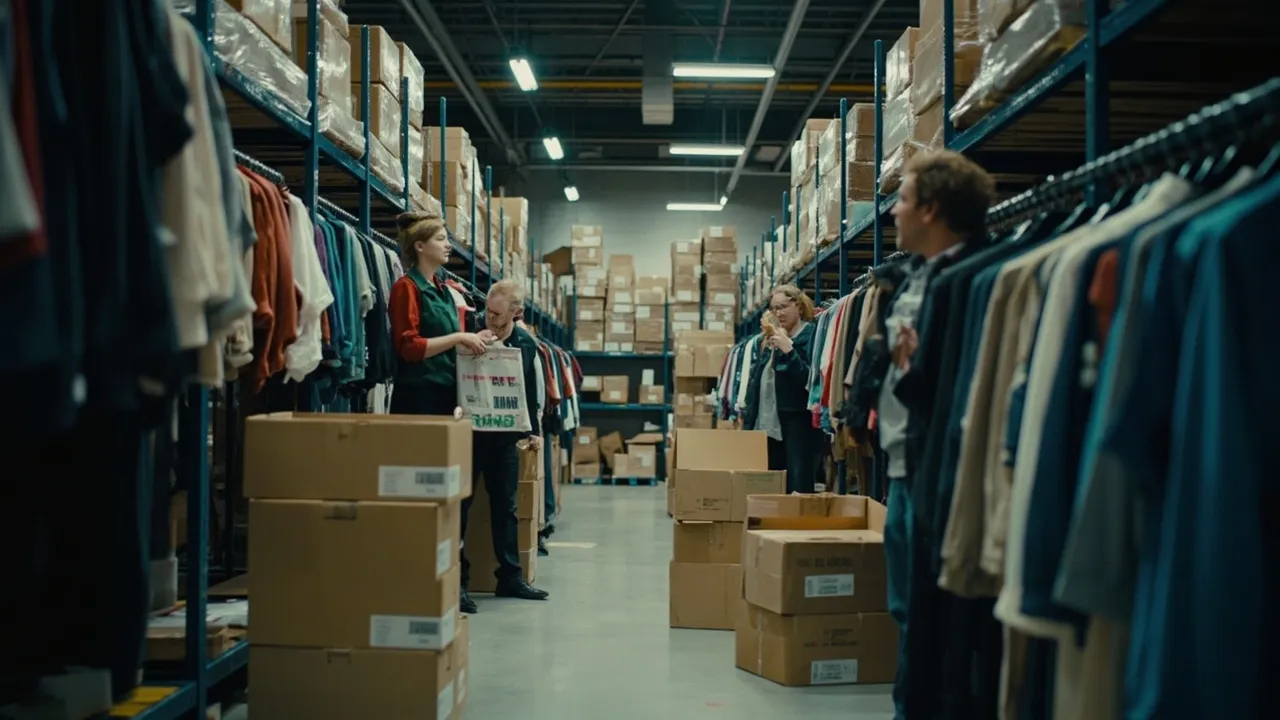
The end of broad U.S. de minimis treatment did more than add a customs line item. It changed the operating model for apparel brands that built their U.S. business around sending individual orders from an overseas warehouse. The old calculation favored low inventory commitment and simple cross-border parcel execution. The new calculation must include duty, customs processing, international delivery, returns, delivery speed, and the margin lost when shoppers abandon a slow or expensive order.
OTAA offers a useful example. The Australia-based menswear accessories brand now fulfills U.S. orders through a facility in Longview, Texas. According to Supply Chain Dive, fulfilling and delivering an average order from Texas costs OTAA roughly half as much as sending it from Melbourne. That is not proof that every apparel company should immediately move all inventory into the United States. It is proof that the comparison has fundamentally changed.
Three models, three different cost structures
The first option is still direct import: pick an order abroad and ship the parcel to the U.S. consumer. This model minimizes domestic inventory and can work for low-volume, high-margin, highly differentiated products. But the landed cost now needs to capture international parcel transportation, duty, brokerage or carrier clearance charges, compliance effort, delivery exceptions, and the cost of an international return. A low warehouse cost abroad can be overwhelmed by the expense attached to every individual shipment.
The second option is bulk replenishment into the United States. Inventory moves in consolidated freight, clears customs as a commercial shipment, and then enters a domestic fulfillment network. Consolidation spreads international transportation and entry costs over many units. It can also base the customs transaction on the appropriate commercial value and classification rather than forcing each consumer parcel through its own international journey. The tradeoff is working capital: the brand owns inventory earlier and accepts demand, storage, and markdown risk.
The third option is domestic fulfillment through an owned facility or a third-party logistics provider. It adds receiving, storage, pick-and-pack, and account-management charges, yet it can sharply reduce outbound parcel zones and make domestic returns practical. It also improves the delivery promise. OTAA's reported cost reduction shows how powerful the combined effect can be when a brand has enough U.S. demand density.
This is becoming a broader apparel response. Supply Chain Dive reported that Aritzia shifted all U.S. order fulfillment from Canada to an expanded Ohio distribution center after the exemption ended. The lesson is not that Texas or Ohio is universally optimal. It is that inventory should be staged on the same side of the border as the demand when the full economics support it.
Build a defensible landed-margin model
Apparel teams should compare the three models at SKU and order level, not with one average freight rate. Four data groups matter.
Inventory data should include weekly demand by SKU, size, color, and destination ZIP code; lead-time variability; sell-through; weeks of supply; and markdown history. Apparel assortments create a particular trap: aggregate demand may look stable while individual size-color combinations move slowly. A domestic node filled with the wrong variants destroys the transportation savings.
Customs data should connect each SKU to its country of origin, complete HTS classification, customs value, duty rate, and any additional tariff exposure. Apparel duty rates vary materially by fiber, construction, gender, and garment type. A generic category estimate is not enough for a location decision. The scale of the former regime shows why precision matters: Inbound Logistics reports that U.S. Customs and Border Protection processed more than 1.36 billion de minimis shipments in fiscal 2024. Replacing a high-volume exception with formal landed-cost logic is a major data problem, not merely a carrier change.
Parcel data should capture actual billed cost by origin, destination ZIP, service, dimensional weight, residential and remote-area charges, delivery days, and exception rate. Domestic fulfillment only creates value if inventory is placed close enough to reduce zones or unlock a better service at the same price.
Returns data should include return rate by SKU, return shipping, inspection and restocking expense, disposition, refund cycle time, and recovered value. Apparel returns are too significant to hide inside an overhead percentage. A U.S. return address can improve the customer experience and recover inventory faster, but only if the process routes sellable products back into available stock promptly.
Set thresholds before moving inventory
A brand should establish explicit margin and service gates rather than treating a U.S. warehouse as a strategic leap of faith. Start with contribution margin per order after product cost, duty, inbound allocation, fulfillment, outbound delivery, expected returns, and markdown risk. Compare that figure with the true direct-from-origin contribution margin.
Then test the decision under demand volatility. A domestic model should survive a downside case with lower unit volume and slower inventory turns. Include 3PL minimums, storage aging charges, peak surcharges, and the cost of transferring or liquidating excess stock. If the business case works only at the optimistic forecast, it does not work.
Service needs its own threshold. Measure the share of U.S. orders delivered within the customer promise, not merely average transit time. A reasonable pilot might require domestic fulfillment to improve on-time delivery by a defined number of percentage points while holding contribution margin above a set floor. The exact gate depends on the brand, but it must be written before the pilot begins.
Inventory placement should also follow demand density. Use order history to model parcel zones from candidate facilities, then identify the smallest assortment that covers the majority of predictable U.S. demand. Keep uncertain, long-tail styles available through cross-border fulfillment while proven core products move domestically. This hybrid approach limits working-capital risk and produces clean evidence for expansion.
Run the shift as a controlled pilot
Choose a stable group of high-volume SKUs and route them through one U.S. node for 60 to 90 days. Track contribution margin, landed cost per unit, fulfillment cost per order, parcel cost, delivery-promise attainment, return cycle time, stockouts, and aged inventory. Compare results against a control group still shipped from the origin facility.
The de minimis era rewarded a simple routing rule: send each inexpensive order directly to the shopper. The post-de minimis era rewards disciplined segmentation. Brands that join customs, inventory, parcel, and returns data can decide which products belong in domestic stock, which should remain cross-border, and when the margin justifies another node.
CXTMS brings transportation costs, shipment execution, carrier performance, and exception data into one operating view. Request a CXTMS demo to model fulfillment alternatives and turn landed-cost thresholds into repeatable routing decisions.