Connected Trailer Intelligence: Convert Sensor Alerts Into Fleet Maintenance Decisions

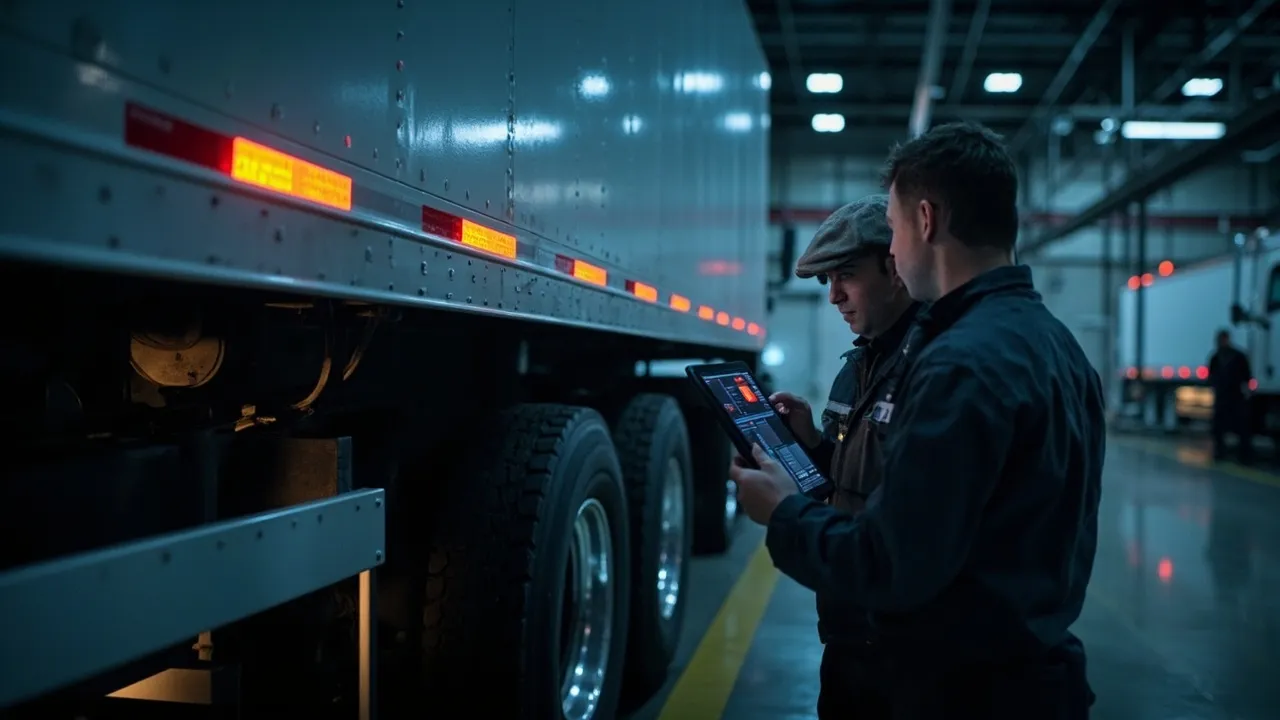
The next generation of trailer telematics promises more than a dot on a map. Connected gateways can bring brake, tire, lighting, cargo, and location signals into one stream. The hard part is no longer collecting data. It is deciding which event requires an immediate stop, which should create a shop order, and which is merely noise.
Food Logistics reports that Saegic, formerly Road Ready, introduced its TrackRR Gateway as a connected trailer intelligence solution for commercial fleets. The launch reflects a broader shift: trailer visibility is moving from standalone location tracking toward a component-level operating picture.
That richer picture matters only when it changes a maintenance or load decision. Fleets should design the workflow before switching on every available alert.
Start with events that change the plan
A gateway can ingest signals from multiple sensors and trailer subsystems, but not every voltage change or momentary threshold breach deserves human attention. Useful events share three characteristics: they identify an asset, describe a condition with operational consequence, and arrive early enough for someone to act.
Four event groups deserve priority:
- Brakes: fault status, abnormal wear indicators, air-system conditions, or repeated anti-lock braking events that could affect safe operation.
- Tires: low pressure, rapid pressure loss, or high temperature, with severity based on the affected wheel position and persistence of the reading.
- Lighting: failed required lamps or circuit faults, especially before dispatch or during a roadside inspection window.
- Location and utilization: unauthorized movement, excessive dwell, missed yard arrival, or an available trailer sitting where demand is low.
The fleet should suppress duplicate readings and short-lived anomalies. A single low-pressure sample might trigger confirmation; a sustained pressure loss across several samples should trigger action. Each normalized event needs the trailer ID, component, timestamp, current location, confidence, severity, and recommended response.
Rank alerts by consequence, not novelty
The newest sensor should not automatically get the loudest alarm. A practical priority model combines safety exposure, probability of failure, load status, distance to service, and time until the trailer's next commitment.
Priority 1: stop or intercept. Use this for a condition that presents immediate safety or breakdown risk, such as rapid tire-pressure loss on an active load or a critical brake fault. The workflow should notify dispatch and maintenance together, identify safe stopping or service options, and preserve the current load plan until a decision is recorded.
Priority 2: repair before next dispatch. A persistent required-light fault or a degrading tire on an empty trailer may not require roadside intervention, but it should block the asset from its next assignment. Create a work order automatically and route the trailer to a compatible shop.
Priority 3: schedule and monitor. Lower-risk deterioration can enter the next preventive-maintenance visit. Escalate it if the condition worsens, repeats, or remains unresolved near a dispatch deadline.
Informational: Location pings and healthy component messages should update asset history without creating an inbox item. Operators need exceptions, not a running narration that everything is fine.
This discipline is essential because alert volume can erode trust. Once dispatchers learn that most warnings require no action, they will ignore the one that matters.
Connect maintenance risk to the load
Trailer intelligence becomes operational intelligence when component condition meets shipment context. A maintenance platform knows the repair history; a TMS knows whether the trailer is empty, preloaded, en route, promised to a customer, or scheduled for another load.
Consider the same tire-pressure alert in three contexts. On an empty trailer parked beside a maintenance facility, it should create a work order and a dispatch hold. On a loaded trailer 15 miles from delivery, it may require driver confirmation and a service decision. On a loaded trailer 400 miles from destination with a rapid-loss trend, it should launch roadside support and evaluate load recovery immediately.
The TMS should also help answer whether the freight can remain on the equipment. Dispatch may substitute a healthy trailer before departure, reassign a future load, arrange a cross-dock, or adjust the customer ETA. These decisions require the sensor event and shipment plan in the same workflow.
Inbound Logistics describes how fleet analytics can identify potential maintenance-and-repair problems and support a shift from reactive maintenance toward predictive or preventive action. The operational payoff comes from making that prediction specific enough to change a work order or dispatch choice.
Define the integration contract
A useful integration among the trailer platform, TMS, and fleet maintenance system needs more than three APIs. It needs clear ownership of every state transition.
The trailer platform should normalize device data and publish component events. The maintenance system should own diagnosis, repair orders, parts, labor, and return-to-service approval. The TMS should own shipment impact, equipment assignment, customer milestones, and dispatch restrictions.
At minimum, the systems should exchange:
- a common trailer identifier and component identifier;
- event type, severity, confidence, timestamp, and sensor source;
- current load, route, driver, location, and next commitment;
- work-order status and estimated return-to-service time;
- dispatch-hold status, reason, owner, and authorized override; and
- acknowledgement and closure records to prevent duplicate action.
Every critical alert should produce a closed loop: event received, owner assigned, decision recorded, work completed or risk accepted, and asset released. If connectivity drops, the last reading must be labeled stale rather than displayed as current.
Measure decisions, not sensor counts
Avoid celebrating the number of connected assets or alerts generated. Better measures include critical-alert acknowledgement time, roadside events prevented, repeat faults after repair, maintenance-related load reassignments, dispatch holds resolved before pickup, false-positive rate, and time from repair completion to TMS release.
Review those measures by sensor type, equipment model, shop, and route. If a particular alert rarely predicts a confirmed defect, change its threshold. If a reliable warning repeatedly arrives after a trailer is loaded, move the inspection or data check earlier in the planning cycle.
Connected trailer intelligence should make fleet decisions calmer and earlier. The winning architecture is not the one with the most telemetry; it is the one that reliably turns a developing fault into the right maintenance priority, load decision, and auditable response.
CXTMS connects equipment status with shipment planning, dispatch exceptions, and customer commitments so teams can act on trailer risk in context. Request a CXTMS demo to see how maintenance alerts can become controlled transportation workflows.