Cal-Maine's 1.8 Million-Bird Loss: A Regional Egg Supply Recovery Playbook

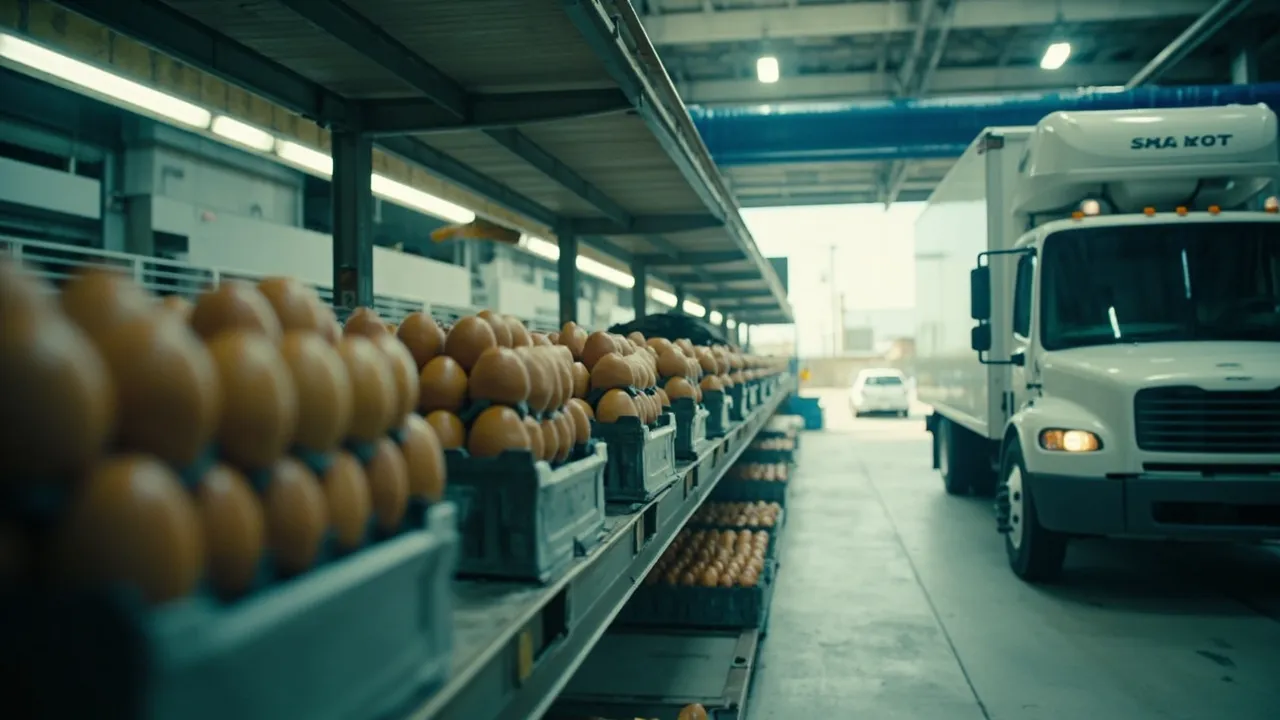
An avian influenza event is not simply a shortfall that procurement can cover with one emergency purchase. It is a regional network disruption with two clocks: inventory can disappear in days, while biological production capacity returns over months.
Cal-Maine Foods' Florida outbreak illustrates the gap. The company removed approximately 1.4 million laying hens and 360,000 pullets from production after highly pathogenic avian influenza was detected. Together, the roughly 1.76 million birds represented 2.7% of its flock, according to Supply Chain Dive. Production at the affected facility stopped while the company followed required depopulation and sanitation procedures.
For retailers, food-service operators, and distributors, that 2.7% figure is useful context—but it is not a replenishment plan. Exposure depends on which customers the Florida site served, what grades and package formats it produced, how much nearby supply is available, and whether replacement product can reach the same delivery windows. Recovery therefore has to be managed at the customer, SKU, facility, and lane level.
Separate the inventory clock from the biological clock
The first clock starts when the plant stops shipping. Planners need an immediate view of sellable eggs already at the facility, in transit, at distribution centers, and committed to open orders. That inventory has a finite shelf-life and may not be interchangeable across shell sizes, grades, cage-free claims, food-service formats, or retailer labels.
The second clock begins with containment. The site must complete depopulation, disposal, cleaning, disinfection, testing, regulatory clearance, flock replacement, and the birds' maturation before normal output resumes. Food Logistics has noted that replacing flocks after an outbreak takes months, including facility cleanup and bringing in new birds. Pullets do not become productive layers on a transportation planner's timetable.
That distinction prevents a common planning error: treating a tentative restart date as a full-capacity date. The recovery plan should carry separate milestones for biosecurity clearance, first placement, first production, marketable volume, and stable weekly output.
Build a 72-hour regional exposure picture
Within the first three days, the response team should assemble one control view covering:
- Available supply: sellable stock by location, lot, expiration date, grade, size, package, and certification
- Demand commitments: open orders, promotions, contractual minimums, priority accounts, and penalties by requested delivery date
- Alternative production: approved farms and packers, usable volume, product equivalency, lead time, and food-safety documentation
- Cold-chain capacity: refrigerated storage, cross-dock slots, reefer availability, dwell limits, and receiving appointments
- Transportation changes: new origins, lane miles, driver hours, routing constraints, fuel impact, and delivery risk
The control view should calculate days of supply against realistic demand, not an unadjusted historical average. Promotions may need to be reduced, large orders split, or customer forecasts challenged. Conversely, schools, hospitals, and contracted food manufacturers may have less flexibility than a retailer that can alter display space or substitute package sizes.
Allocate by service consequence, not customer volume
When supply is constrained, a simple proportional cut spreads pain but ignores consequences. A better allocation score combines contractual obligation, customer criticality, substitution options, shelf-life, margin, and the probability that product will arrive on time.
Each allocation decision should preserve the reason code. Was an order reduced because product was unavailable, because refrigerated capacity was constrained, or because another account had a higher service priority? That audit trail helps customer-service teams explain changes consistently and allows leadership to revise the policy when conditions change.
Substitution also needs rules. Large shell eggs may not be interchangeable with medium eggs for every industrial recipe; conventional product cannot automatically fill a cage-free commitment; and bulk food-service packaging may not fit a retail replenishment process. The TMS should receive the approved substitute and changed origin only after commercial and quality teams authorize it.
Rebuild lanes around the replacement source
Alternative supply changes more than procurement cost. A new origin may add hundreds of miles, shift pickup times, require a different carrier, or create a new refrigerated transfer. Planners should model the complete landed and service impact before confirming customer dates.
For every replacement lane, capture the source facility, available pickup window, temperature requirement, transit-time range, equipment, carrier acceptance, receiving appointment, and contingency route. Then compare the new plan with the original promise. A shipment that technically has product but lacks a feasible refrigerated appointment is still at risk.
Consolidation can protect scarce capacity, but it must not create excessive dwell. Temperature alerts, missed pickups, rejected tenders, late departures, and appointment failures should feed the same exception queue. That gives the recovery team a current picture instead of a spreadsheet that was accurate yesterday morning.
Run recovery through measurable gates
A credible recovery plan replaces vague status labels with evidence-based gates:
- Containment: affected inventory is isolated and traceable; required depopulation and disposal are complete.
- Sanitation clearance: cleaning, disinfection, testing, and regulatory approvals are documented.
- Replacement: new flock placement dates and expected maturation ranges are confirmed.
- Ramp: weekly marketable output is measured against plan, with quality and pack-format constraints visible.
- Network normalization: emergency suppliers, allocations, premium freight, and temporary lanes are retired only after stable service is demonstrated.
Monitor fill rate, on-time delivery, rejected tenders, premium freight per dozen, spoilage, substitution rate, and forecast error throughout the event. The 2025 U.S. egg shock showed why this matters: Reuters reported that grocery egg prices had nearly doubled year over year as outbreaks eliminated millions of hens. Operational delay can quickly become a commercial and customer-trust problem.
Turn the disruption into a repeatable response
The objective is not merely to move eggs from another farm. It is to synchronize constrained inventory, approved substitutions, refrigerated capacity, carrier execution, and customer promises until biological capacity is genuinely restored.
CXTMS gives logistics teams a shared operating layer for alternative sourcing lanes, allocation-driven shipments, carrier tenders, milestones, and exceptions. Request a CXTMS demo to see how your team can convert a regional food-supply disruption into a controlled, auditable recovery plan.