Boeing's New 767 Conversion Slot Is a Warning to Plan Freighter Capacity by Mission

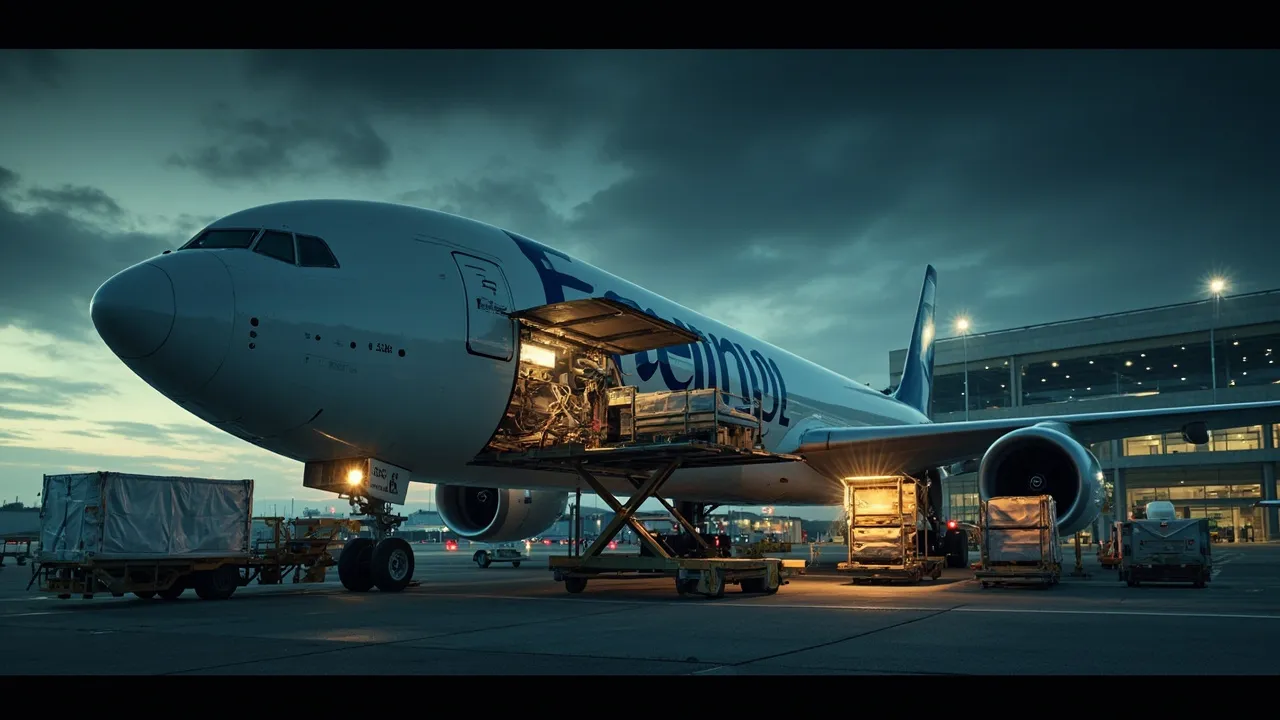
A freighter order is not immediately available capacity. It is a place in a production queue, followed by engineering work, structural modification, testing, certification, positioning, and entry into service. That distinction matters when forwarders build allocations or charter contingencies around aircraft that may not be operational when demand arrives.
FreightWaves reports that Icelease reserved a Boeing conversion slot for one 767-300 passenger aircraft and took options for as many as two more. The aircraft is scheduled for induction in 2028. Boeing describes the 767-300 converted freighter as the most popular medium widebody conversion, with approximately 57 metric tons of payload and 3,300 nautical miles of range.
Those figures are useful screening data, but they do not answer the operational question: can this aircraft move a particular shipment, on a particular lane, through the available airports, on the required schedule? Capacity planning should begin with the cargo mission—not the aircraft headline.
Conversion capacity arrives in stages
Passenger-to-freighter conversion is more than removing seats. The work includes cutting and reinforcing a main-deck cargo door, strengthening the floor, installing cargo-handling and restraint systems, modifying fire detection and suppression, and updating aircraft systems. The feedstock aircraft must also be acquired, inspected, positioned, and maintained.
The 2028 induction date in the Icelease announcement makes the planning lesson unusually clear. A slot secured now represents potential future supply, not lift a forwarder can allocate next quarter. Even after induction, planners must allow for conversion time, certification, delivery, crew and maintenance readiness, and the operator's network deployment decision.
Track future aircraft through explicit milestones: firm order, feedstock identified, induction date, conversion start, certification status, redelivery, operator assignment, and commercial availability. Apply a probability and earliest usable date to each stage. An option for another aircraft should never carry the same confidence as an aircraft already delivered to an operating fleet.
Match six constraints to the mission
Payload and range are connected, not independent maximums. Fuel, weather, runway length, temperature, alternates, crew, and aircraft configuration can reduce the cargo carried on a specific sector. A planner who assigns 57 metric tons because the brochure says 57 metric tons may discover that the lane requires a fuel stop or offloaded freight.
Build the capacity profile around six constraints:
- Payload: Use allowable payload for the actual route and operating conditions, then compare both average and peak shipment weight.
- Range: Model origin, destination, alternates, seasonal winds, and the operational cost of a technical stop.
- Door and contour: Confirm the largest piece can pass through the main-deck door and fit within an approved pallet contour. Total cubic volume does not prove loadability.
- Floor loading: Heavy machinery can remain impossible to carry even when total aircraft payload is available. Check concentrated loads, pallet positions, restraint, and weight distribution.
- Airport access: Validate runway performance, parking stands, curfews, customs hours, ground-handling equipment, and local permission for the aircraft and operation.
- Maintenance support: Account for spare parts, qualified engineers, recovery options, and the effect of an aircraft-on-ground event at an outstation.
These details turn nominal capacity into usable capacity. They also explain why two aircraft with similar payload figures are not interchangeable for every shipment.
Create a capacity map for four cargo missions
Express parcels are usually volume- and schedule-driven. Planners should prioritize main-deck positions, container compatibility, sort cutoffs, fast ground turns, and reliable overnight rotations. Express operators account for about 45% of global air cargo revenue, according to a FreightWaves report on Boeing's long-term outlook, so parcel demand can compete aggressively for suitable freighter capacity.
Automotive parts are driven by production continuity. A shipment may be relatively small but carry an enormous line-down cost. The capacity map should include latest pickup time, direct-flight options, onboard courier or next-flight-out alternatives, 24/7 escalation, and recovery time if the booked movement fails.
Industrial machinery is governed by geometry and concentrated weight. Record dimensions, center of gravity, lifting points, packaging, hazardous characteristics, door clearance, floor limits, required loading equipment, and airport handling capability before requesting a charter. A widebody with enough aggregate payload may still be unable to accept the piece.
High-tech cargo combines value, security, sensitivity, and speed. Map secure storage, custody handoffs, temperature or shock limits, screening procedures, approved handlers, exposure time, and recovery routing. Capacity is only valid if the shipment can maintain its control requirements throughout the journey.
This mission map should live at shipment or product-family level. A generic entry labeled “767 capacity” hides precisely the constraints that cause failed bookings and last-minute premiums.
Tie allocations to evidence, not fleet announcements
Forwarders should separate base allocation, surge allocation, and contingency lift. For each critical lane, record committed weight and positions, allowable cargo profiles, operating days, cutoff times, cancellation terms, and peak-season restrictions. Then connect each allocation to the aircraft types and operators that can actually perform the mission.
Contingency plans need the same discipline. Name the alternate gateway, truck connection, aircraft class, handler, customs process, decision deadline, and commercial trigger. “Charter if needed” is not a plan when the required door size, loading equipment, or operating permission is unavailable.
Specialized demand is already growing. FreightWaves says FedEx has moved hundreds of aircraft engines since June 2025, while engine movements increased fifteenfold from earlier levels. That scale illustrates why high-consequence freight needs dedicated operating workflows rather than leftover general capacity.
Manage capacity as a dated operational promise
The Icelease conversion slot is a positive signal for medium-widebody supply, but it is also a reminder that fleet announcements mature slowly. Forwarders should distinguish ordered, converting, delivered, scheduled, and commercially allocable aircraft; validate every cargo mission against physical and airport constraints; and maintain named alternatives before the peak arrives.
CXTMS gives air-freight teams a shared view of allocations, shipment requirements, milestones, costs, and exceptions. Planners can connect each booking to its operational constraints and escalate a capacity gap while there is still time to change the routing.
Request a CXTMS demo to see how mission-level capacity planning can improve air-cargo execution.