Americas Heavy-Oil Glut: Price the Barrel and the Voyage as One Decision

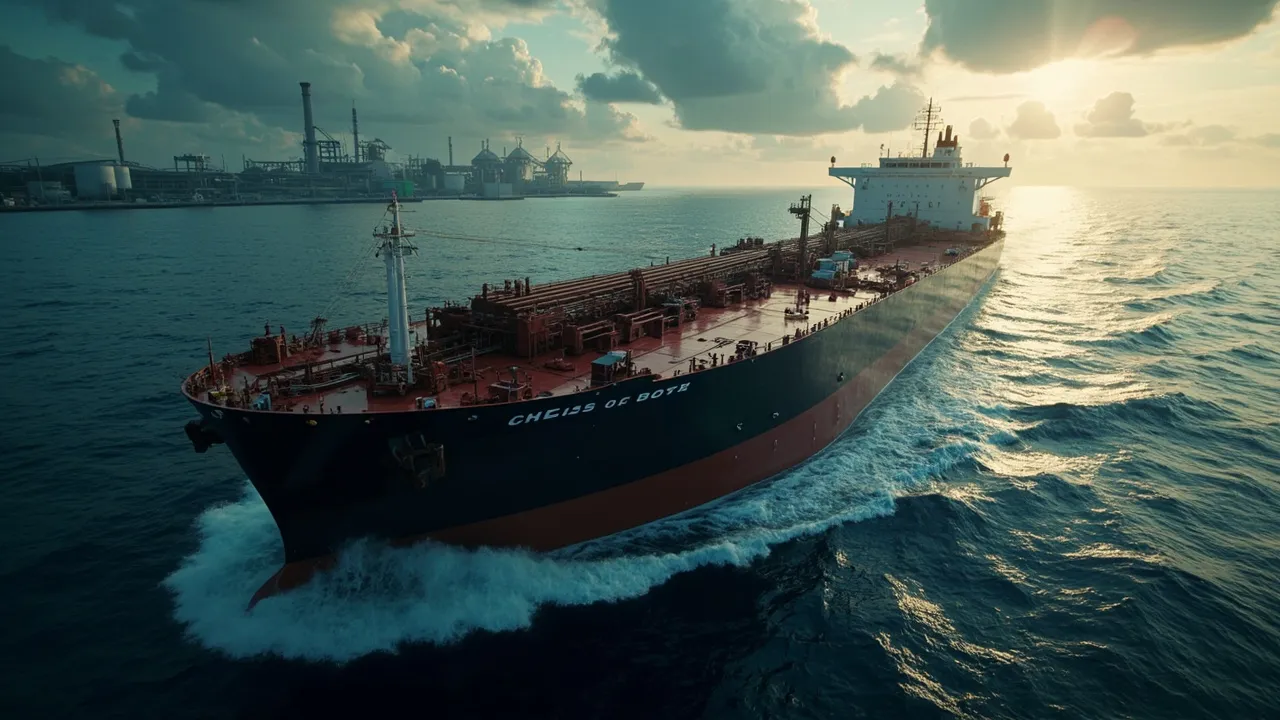
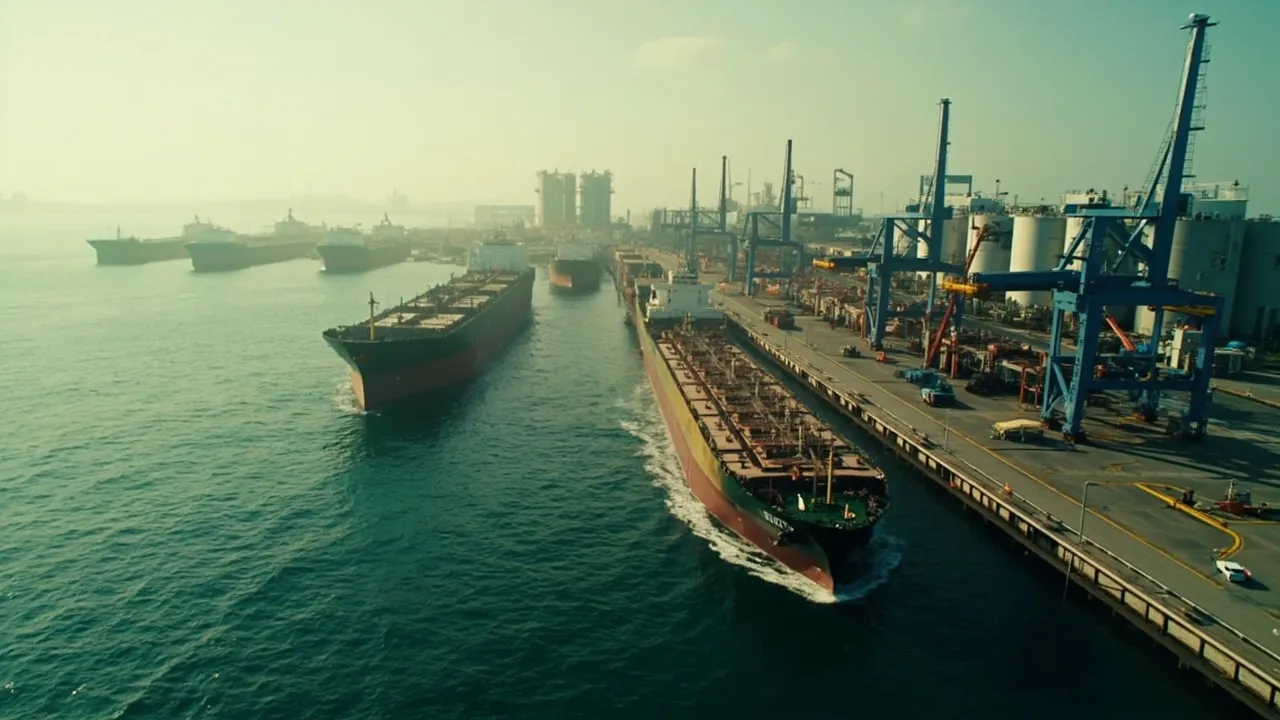
A discounted barrel is not a bargain when the ship needed to move it costs more than the discount. That is the lesson emerging from the Americas heavy-oil glut: supply can accumulate near production while compatible refiners in Asia and Europe compete for barrels, because the voyage between them has become the decisive cost.
Reuters reported that a tanker voyage from the Americas to Asia rose above $80 million, or roughly $40 per barrel, compared with about $10 million to $15 million near the beginning of 2026. At that spread, procurement teams cannot evaluate crude differentials and freight in separate workflows. They need one delivered-margin decision before nominating a cargo.
Build the Decision Around Refinery-Gate Value
The correct comparison is not origin crude price versus a benchmark. It is the expected refinery value of the cargo minus every cost and risk required to deliver it.
A practical model begins with the crude's yield value at the candidate refinery. Then subtract the purchase price, quality adjustment, freight, insurance, financing, terminal charges, expected demurrage, sanctions-compliance costs, loss allowance, and the cost of tying up working capital during transit. The result is the expected delivered margin.
That calculation should be run for every feasible destination, not just the buyer named in the first commercial discussion. Heavy crude is not interchangeable across plants. Sulfur content, density, metals, acidity, and expected yields determine whether a refinery can process the grade profitably. A nominally higher bid from an incompatible or capacity-constrained refinery may be worth less than a lower bid from a plant designed for heavy sour feedstock.
The freight component also needs to be dynamic. A separate Reuters analysis found that the Baltic Exchange's TD22 rate for a US-to-China supertanker reached $637,675 per day on October 8 before easing to $634,974 per day. A small percentage change at that level can move cargo economics by millions of dollars.
Convert Freight Volatility Into Nomination Thresholds
Commercial teams should agree on thresholds before a vessel is fixed. For each cargo, calculate a base case and at least three stresses: higher daily hire, longer voyage duration, and additional waiting time at load or discharge.
The nomination threshold is the minimum risk-adjusted margin required to proceed. It should include a buffer for volatility between commercial approval and vessel fixture. If expected margin falls below that floor, the cargo stays uncommitted, moves to a nearer destination, or waits for a better freight window.
Cancellation rules need the same discipline. Define the latest cancellation point, the cost of exiting the charter or purchase, and the margin at which cancellation destroys less value than continuing. That prevents sunk-cost thinking from carrying a loss-making voyage forward simply because the barrel has already been bought.
Use absolute dollar thresholds as well as dollars per barrel. A $1-per-barrel forecasting error on a two-million-barrel VLCC is a $2 million exposure. Percentage-only controls can make a seemingly modest miss look operationally acceptable when the cash consequence is not.
Track the Variables That Can Break the Voyage
Every active cargo should have a control record connecting the commercial position with the physical movement. At minimum, track:
- crude grade, assay, volume, purchase differential, and refinery compatibility;
- vessel class, capacity, daily rate, voyage estimate, ballast position, and laycan;
- bunker assumption, canal or routing constraints, insurance, and financing cost;
- load-port readiness, discharge window, free time, and demurrage rate;
- sanctions screening status for the vessel, owner, operator, cargo, counterparties, banks, and ports;
- base, upside, and downside delivered margin for each eligible destination;
- nomination deadline, cancellation deadline, and accountable decision owner.
Freight sensitivity deserves its own visible metric. Show how delivered margin changes for each additional $10,000 of daily hire, each extra sailing day, and each day of demurrage. When rates are above $600,000 per day, a five-day disruption is not a footnote—it represents more than $3 million in incremental hire before other costs.
Demurrage exposure should be probability-weighted by terminal and season. A low headline freight rate can be misleading if congestion, weather, documentation, or storage constraints make waiting likely. Record the operational reason for every delay so future estimates use actual port performance rather than a generic contingency.
Preserve Destination Optionality Without Pretending It Is Free
Optionality is valuable when regional prices diverge, but only if the cargo can physically and legally change course. For each alternative destination, confirm refinery acceptance, draft limits, terminal windows, customs requirements, sanctions exposure, voyage days, and incremental freight.
Assign each option an expiry time. A diversion that works before a cape passage or bunker stop may disappear afterward. The operating team should receive an alert as each decision point approaches, with refreshed margins for the original and alternative ports.
This is also where sanctions screening must operate continuously. Clearance at nomination is not enough if ownership, counterparties, vessel status, or payment channels change during a long voyage. A compliance hold can erase the value of a diversion and add waiting costs at precisely the moment the commercial team is trying to protect margin.
Manage the Barrel and Vessel as One Position
The Americas glut demonstrates that commodity availability and logistics capacity form a single market. When long-haul freight rises from roughly $10 million-$15 million to more than $80 million, familiar crude differentials stop explaining the trade. Delivered economics take over.
Procurement, chartering, compliance, terminal operations, and refinery planning therefore need one shared view of the cargo. The decision is not “Is this barrel cheap?” or “Can we find a ship?” It is “Does this exact barrel, on this vessel, through this route, into this refinery, still clear our risk-adjusted margin?”
CXTMS connects commercial assumptions, transport milestones, documents, exceptions, and accountable owners in one operational workflow. Request a CXTMS demo to see how your team can manage energy cargo decisions around delivered margin instead of disconnected spreadsheets.