Amazon Standard Ocean Express: How to Qualify the Direct Port-to-Rail Service

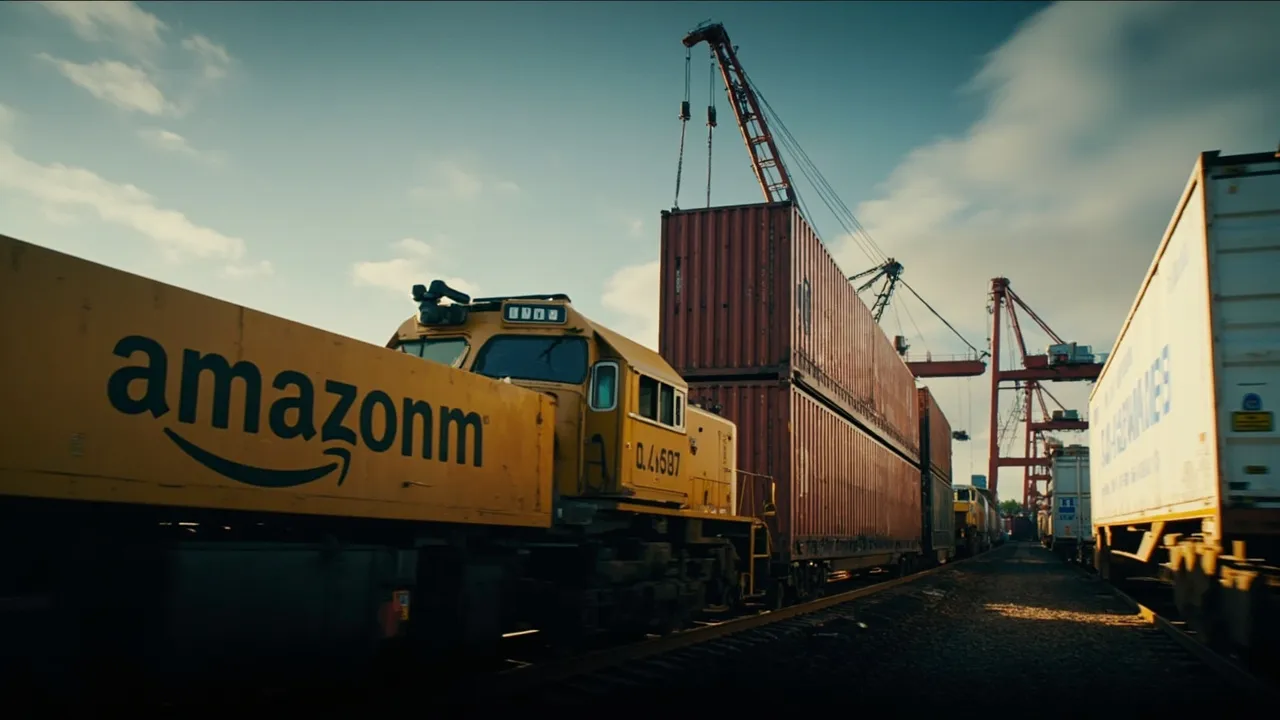
Amazon has added a new routing choice for inventory entering the United States through Los Angeles: transfer the freight to rail and move it directly to East Coast fulfillment centers. Standard Ocean Express sounds straightforward, but the commercial decision is not simply rail versus ocean.
The real choice is between two end-to-end inventory paths, each with different handoffs, cutoffs, failure modes, and data requirements. Importers should qualify the new service with a controlled lane pilot before changing a large allocation.
Understand What Actually Changed
According to Supply Chain Dive, Amazon announced Standard Ocean Express on September 11. The service routes goods through the Port of Los Angeles and then by direct rail to Amazon fulfillment centers on the East Coast. It is available for Seller Managed Placement bookings under Amazon Global Logistics.
That changes the import handoff. Instead of leaving East Coast inventory in a standard domestic-routing queue after West Coast arrival, the shipper selects a defined transcontinental rail path when booking. Amazon displays ocean rates and estimated delivery windows at that point, allowing the seller to compare speed and cost before committing.
Important details remain undisclosed. Supply Chain Dive reported that Amazon did not publish the service price or a numerical comparison with its other routing options. “Faster” is therefore a proposition to test, not a performance guarantee to insert into an inventory plan.
The service may shorten time to East Coast availability, but only if its connecting events work consistently: vessel discharge, container availability, customs release, rail cutoff, train departure, inland grounding, fulfillment-center appointment, and final receipt.
Compare Variance, Not Just Quoted Transit
A booking estimate describes the expected path. It does not describe the spread between the best and worst outcomes. For inventory planners, that spread can matter more than the average.
Compare Standard Ocean Express against the current routing on five dimensions:
- Total transit variance: Measure port discharge to fulfillment-center receipt, not merely rail linehaul. Report median, 90th percentile, and worst case.
- Cutoff discipline: Record the time between container availability and rail cutoff. A fast train offers little benefit when late customs release or port congestion causes a missed departure.
- Dwell by node: Separate marine-terminal dwell, rail-origin dwell, destination-ramp dwell, and fulfillment-center waiting time. A single door-to-door number hides the source of delay.
- Claims and exception ownership: Establish who investigates damage, shortage, misrouting, or a missed connection at every handoff and how quickly a case receives an owner.
- Final-mile options: Confirm the destination facilities served, appointment rules, recovery trucking options, and whether inventory can be redirected when demand changes.
Rail infrastructure can offer meaningful scale, but capacity does not automatically produce service reliability. As a useful benchmark, FreightWaves reports that Alabama’s new $100 million inland rail terminal is designed for 60,000 TEUs annually. Those headline figures describe physical capability; shippers still need operating evidence on departures, cutoffs, dwell, equipment, and recovery. The same principle applies to any direct port-to-rail offer.
Run a Controlled Lane Pilot
Start with a narrow test rather than moving an entire East Coast allocation. Select two or three representative product groups with stable demand, enough safety stock to tolerate a learning period, and clear shipment-level economics. Retain the existing route as a control during the same weeks.
Before the first booking, document the baseline. Capture current transit from port discharge to available inventory, total transportation and accessorial cost, late-arrival frequency, manual touches, and stockout exposure. Without a baseline, a faster arrival can feel impressive while remaining impossible to value.
Then define success thresholds. A pilot might require a lower 90th-percentile transit time, no increase in damage or claims, complete milestone coverage on at least 95% of shipments, and a total landed cost within an approved range. The precise targets should reflect the product’s margin and inventory risk.
Do not test only clean shipments. Include ordinary sources of friction: a customs hold, a container released near cutoff, a weekend arrival, an appointment change, and a shipment that misses its planned train. The objective is to learn how the service recovers, because disruption performance determines how much safety stock the route actually requires.
Keep the sample large enough to avoid judging the service on one unusually good or bad move. Review results weekly, but make the allocation decision only after the pilot includes several vessel arrivals and rail departures.
Require Shipment-Level Milestones
The advertised route can be validated only when every important event is timestamped. At minimum, capture booking confirmation, origin departure, vessel arrival, discharge, customs release, container availability, rail billing, rail ingate, train departure, destination arrival, grounding, appointment, delivery, receipt, and empty return where applicable.
Each milestone needs three attributes: planned time, actual time, and responsible party. That structure turns a generic “delayed” alert into an actionable exception. If customs release threatens the train cutoff, the team needs the remaining recovery window and an owner—not another status email.
Build escalation rules around consequence. A one-hour slip with two days of buffer should not create the same response as a missed departure that threatens a promotion. Prioritize exceptions using inventory position, customer demand, cutoff proximity, and recovery cost.
Cost data belongs in the same record. Capture the quoted rate plus storage, demurrage, detention, chassis, redelivery, rehandling, and expedite charges. A service can improve nominal transit while losing its advantage through exception costs.
Expand Only When the Evidence Holds
Standard Ocean Express gives sellers another way to position imported inventory closer to East Coast demand and potentially reduce stockout risk during high-volume periods. Its value, however, will vary by origin, product, vessel schedule, cutoff fit, destination, and inventory policy.
After the pilot, segment the result. Expand volume on lanes where transit variance, milestone quality, and landed cost meet the approved thresholds. Keep the existing routing where recovery options or data coverage remain weak. Recheck performance during peak season rather than assuming the initial result will hold under heavier demand.
CXTMS brings bookings, intermodal milestones, costs, and exceptions into one operational view so logistics teams can compare promised service with actual outcomes. Request a CXTMS demo to build a controlled qualification program for port-to-rail lanes.