Amazon's 5,000 Smart Glasses Need a Driver Safety and Productivity Baseline

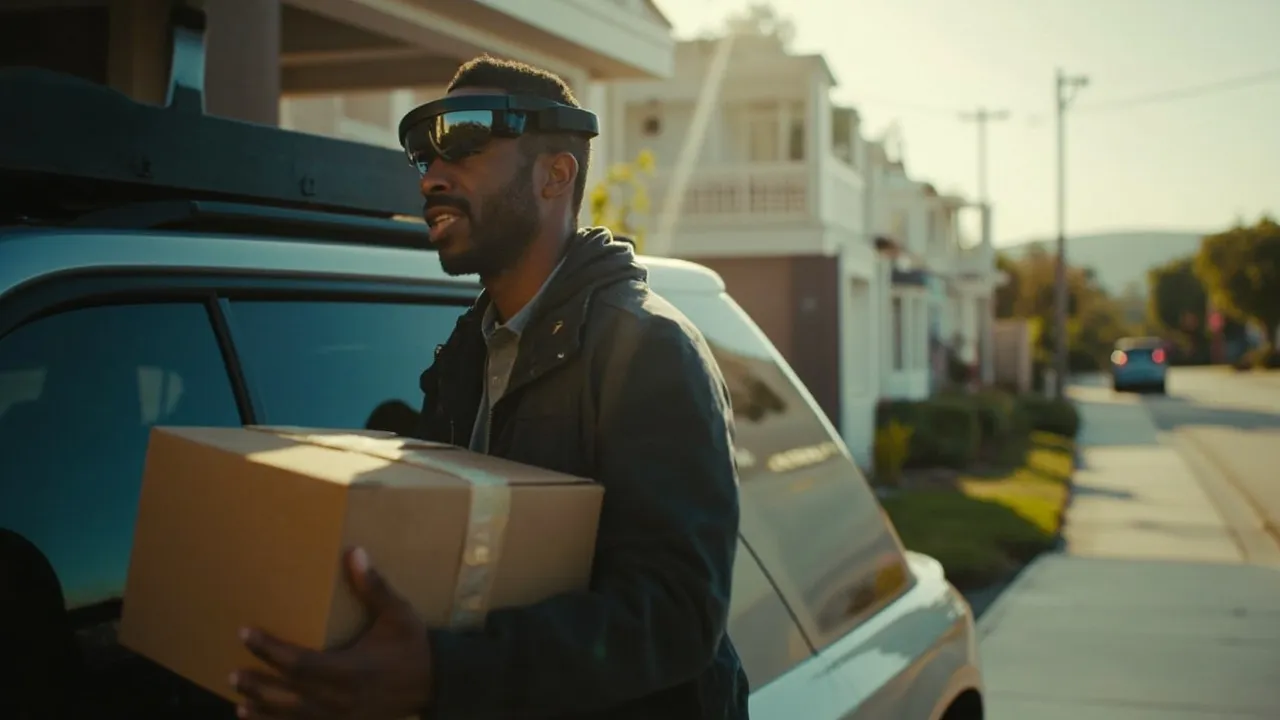
Amazon's plan to put smart glasses on 5,000 delivery drivers should be treated as an operational trial, not simply a technology rollout. The distinction matters because a device that saves seconds at a doorstep can still create new distraction, reliability, training, and privacy risks across an entire route.
The planned scale is substantial. SupplyChainBrain reports that Amazon intends to deploy 5,000 pairs this year and expand to more than 20,000 by the end of 2027. The glasses provide walking directions, hazard alerts, and package information while reducing the need to handle a phone. That creates a credible productivity case—but only a baseline can show whether the benefit is real and safe.
Measure the route before changing it
The cleanest evaluation begins before a driver receives the glasses. Select comparable routes and record at least two weeks of normal performance. Then phase devices into a treatment group while a matched control group continues using the existing workflow.
The baseline should cover five measures:
- Stop time: Measure from parking to departure, then separate walking, package search, customer handoff, proof of delivery, and return-to-vehicle time.
- Navigation errors: Count wrong turns, missed addresses, repeated approaches, unsafe crossings, and stops where the driver must consult a phone.
- Package-search time: Track the time between opening the cargo area and selecting the correct parcel. A wearable cannot fix poor load sequencing by itself.
- Distraction events: Record abrupt braking, device interaction while the vehicle is moving, prolonged gaze diversion, and unnecessary alerts.
- Safety outcomes: Capture slips, trips, falls, near misses, strains, collisions, and reported visual discomfort—not just recordable injuries.
Amazon has said some drivers saved 30 minutes over a shift during testing, according to Reuters. That result is promising, but a route-level median is more useful than a headline maximum. Operators should report the distribution: how many drivers saved time, on what route types, and whether the savings persisted after the novelty and training periods.
Test the safety claim independently
Hands-free information can reduce phone handling, but information inside a driver's field of view is not automatically distraction-free. Prompts can arrive at the wrong moment, obscure a hazard, or encourage a driver to follow an instruction despite changing street conditions.
Every visual prompt therefore needs an operating rule. Navigation cues should disappear while the driver is behind the wheel unless specifically designed and validated for driving. At the doorstep, prompts should be brief, peripheral, and prioritized by risk. A loose dog, blocked walkway, or customer access warning belongs above a productivity reminder.
Drivers must also be able to dismiss, mute, or override a prompt without being penalized. The system should record the override and reason—incorrect map, unsafe instruction, inaccessible entrance, damaged path, weather, or customer request—so the underlying workflow can be corrected.
This matters because wearables can produce meaningful gains when the work and interface fit. An Inbound Logistics review cites one warehouse deployment that improved efficiency by 10% and reduced picking errors by roughly 75%. Delivery is a less controlled environment than a warehouse, however. Traffic, animals, weather, stairs, and members of the public make safety validation at the route level essential.
Separate device uptime from operational value
A pilot can look successful while drivers quietly revert to phones whenever batteries fail, displays wash out in sunlight, lenses fog, cellular service drops, or prescription compatibility causes discomfort. That hidden fallback work must be counted.
Track device uptime as a percentage of active route minutes and classify every failure. Also measure battery swaps, restarts, connectivity gaps, unreadable prompts, damaged units, and help-desk contacts. Compare stop performance for fully supported routes with partially supported ones. If the glasses work for only 85% of a shift, the remaining 15% may erase the apparent gain through workflow switching and recovery time.
Training should be measured the same way. Record time to competency, errors during the first five shifts, refresher needs, and performance after route or software changes. A device that requires constant coaching is not yet scalable, even if an experienced test group performs well.
Put worker privacy in the trial design
Smart glasses sit close to a worker's eyes and may generate sensitive information about location, movement, attention, customers, and private property. The rollout needs a written data inventory: what is collected, when collection begins and ends, how long information is retained, who can access it, and whether it influences discipline or performance ratings.
Collect only what is required to deliver the prompt and evaluate the trial. Drivers should receive plain-language disclosure and a visible indicator of active sensors. Customer-facing instructions should explain whether images or audio are captured at the doorstep. Raw footage, if any exists, requires strict access controls, short retention, and documented deletion.
Privacy is also an accuracy issue. Managers should not infer carelessness from a dismissed prompt, a gaze signal, or missing device data without context. Device telemetry should trigger investigation, not automatic punishment.
Use a balanced rollout scorecard
After 30, 60, and 90 days, compare the treatment and control groups using a balanced scorecard. Productivity metrics should include median stop time, package-search time, first-attempt completion, and stops per paid hour. Safety metrics should include distraction events per 100 miles, near misses per 1,000 stops, injuries, and driver-reported fatigue. Reliability metrics should include uptime, failure rate, and fallback minutes. Human factors should include comfort, trust in prompts, training completion, and opt-out rates.
Expansion should require improvement in productivity without deterioration in safety, privacy compliance, or driver experience. Route types that fail the threshold—dense urban towers, rural roads, gated communities, or severe-weather markets—should remain out of scope until their failure modes are addressed.
The opportunity is real: fewer phone interactions, faster package identification, and better walking guidance can remove friction from the last 100 yards. But deploying 5,000 devices is large enough to expose weak controls and still small enough to learn before scaling to 20,000. The winning metric is not glasses distributed. It is safer, more consistent delivery performance under real operating conditions.
CXTMS gives logistics teams a shared record for route milestones, exceptions, assets, and performance measures. Book a CXTMS demo to see how your organization can evaluate new delivery technology with accountable operational data.