2,500 Class 8 Electric Trucks: The Depot Readiness Gates Shippers Cannot Skip

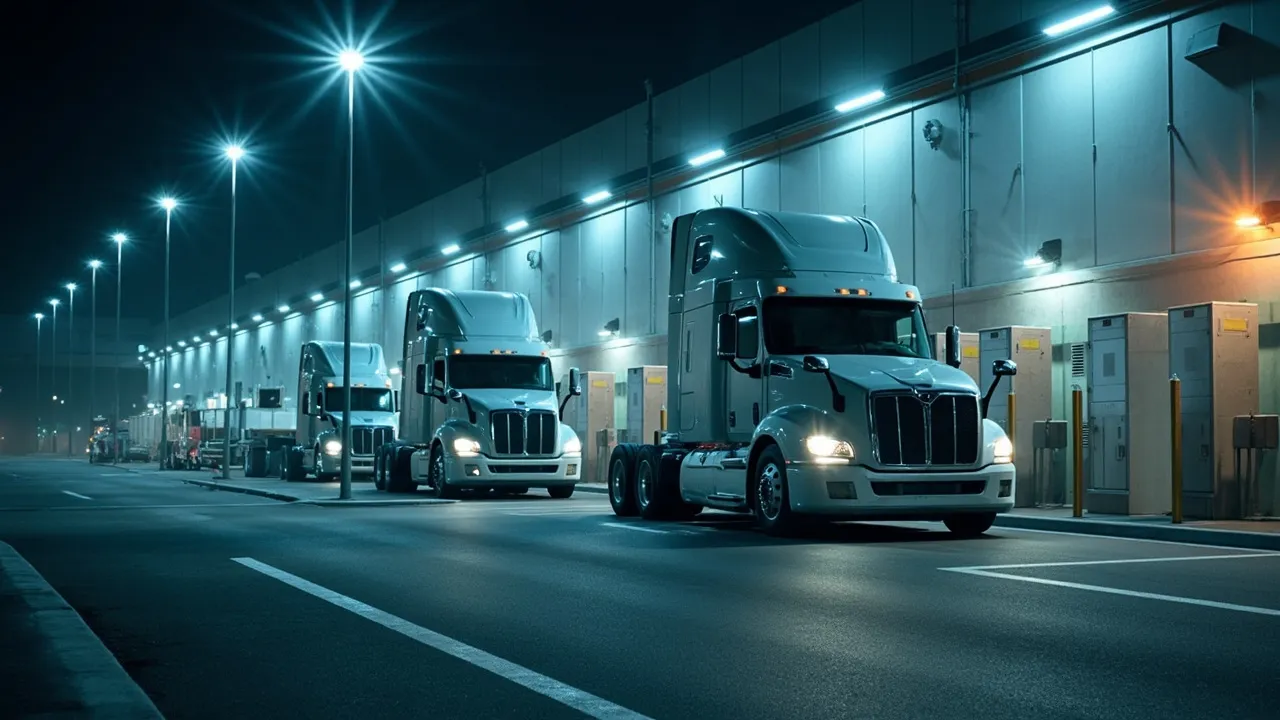
A coalition order for 2,500 battery-electric Class 8 trucks is big enough to change the electric-freight conversation. The question is no longer whether an individual tractor can complete a demonstration route. It is whether depots, utilities, dispatch teams, and transportation systems can support thousands of repeatable revenue moves without creating a new class of service failure.
That distinction matters for shippers. Buying or contracting for an electric truck is only the visible part of deployment. The harder work is qualifying lanes against usable range and payload, securing utility capacity, fitting charging into actual dwell, and designing recovery when a charger, tractor, or route plan fails.
Fleet Scale Changes the Operating Problem
Supply Chain Dive reports that a coalition of cargo-owning shippers placed an order for 2,500 battery-electric Class 8 trucks. At that scale, deployment cannot be managed as 2,500 separate vehicle purchases. It becomes a coordinated capacity program spanning shipper demand, carrier operations, charging sites, equipment supply, and renewable electricity requirements.
The operational unit is not the truck; it is the truck-depot-lane combination. A tractor with enough nameplate range can still fail its assignment if cold weather reduces usable energy, elevation raises consumption, congestion erodes the charging window, or a heavier battery constrains payload. Likewise, a charger with adequate rated power adds no capacity if the utility interconnection cannot supply it when multiple tractors return together.
Charging demand quickly becomes industrial in scale. One operator told FreightWaves that its LAX depot draws at least one megawatt continuously and reaches four to five megawatts during charging peaks. Another reported Long Beach site was designed with 25 chargers, including 19 dual-port units, to charge 44 trucks simultaneously in about 90 minutes. Those figures illustrate why a fleet order and an energized depot must run on separate, synchronized schedules.
Gate 1: Prove the Depot Can Deliver Energy
Before assigning vehicles, obtain a written utility view of available service, required upgrades, interconnection milestones, and expected energization date. Compare that capacity with a time-phased charging model, not a simple charger count.
For every depot, model tractor arrival times, remaining state of charge, next dispatch, charger power, charging curves, simultaneous demand, and non-vehicle facility loads. Then stress the plan for peak day volume and one unavailable charger. Smart charging can stagger demand, but software cannot manufacture megawatts that the site does not have.
Pass this gate only when the depot has:
- Energized capacity for the first deployment wave and a documented path for later waves.
- Sufficient dispensers and parking geometry to avoid blocking, trailer conflicts, or repeated tractor shuffling.
- A demand-management plan that respects departure priority and utility constraints.
- Charging redundancy, maintenance response, and a fallback location or diesel recovery process.
Infrastructure scarcity is not theoretical. Reuters reported that fewer than 400 charging ports had been built through April 2025 under two U.S. federal programs funded at $7.5 billion. Although those programs are not a proxy for private depot construction, the slow rollout is a warning: permitting, procurement, and interconnection can lag vehicle plans by years.
Gate 2: Qualify the Lane, Not Just the Mileage
Start with actual telematics and shipment history. Nameplate range is a screening input, not an operating promise. Calculate energy use by loaded and empty leg, season, traffic pattern, elevation, speed, auxiliary loads, and driver behavior. Retain a reserve for detours and charger failures rather than planning the battery to zero.
The lane gate should test five variables:
- Payload: Compare legal and practical payload with the battery-electric tractor’s tare weight. Cube-limited freight may fit readily; weight-limited freight may require fewer units per load or another asset.
- Grade: Repeated climbs consume energy even when regenerative braking recovers part of it downhill.
- Temperature: Cabin conditioning and battery thermal management can reduce route margin in hot or cold extremes.
- Charging opportunity: Verify that dwell is long enough at the power the site can actually deliver—not merely the charger’s maximum rating.
- Recovery: Define what dispatch does when consumption exceeds plan, a customer delays unloading, or the assigned charger is unavailable.
Run representative loads through the harshest expected conditions before declaring the lane qualified. A route that works with a light trailer on a mild day has not passed a year-round freight test.
Gate 3: Protect Dispatch From Brittle Plans
Electric dispatch requires energy-aware assignment. The TMS should block a load when projected arrival state of charge falls below policy, a scheduled charger is unavailable, or dwell cannot restore enough energy for the next move. It should also surface alternatives: swap tractors, move the charging window, use another depot, adjust the appointment, or recover with diesel capacity.
Capture planned and actual kilowatt-hours, charge duration, charger uptime, queue time, route energy consumption, payload, weather, departure delay, and service result. Compare electric and diesel tractors on equivalent work—same lane, payload band, stops, and service commitment. Otherwise, a short urban electric route and a long highway diesel route produce a meaningless cost comparison.
The scorecard should include cost per loaded mile, energy cost per shipment, tractor utilization, on-time pickup and delivery, charge-related delay, payload loss, maintenance downtime, and emissions per shipment. Separate electricity consumption from demand charges and site capital so managers can see whether variance comes from operations, tariffs, or infrastructure.
Gate 4: Scale in Waves With Exit Criteria
Begin with a small set of high-frequency, return-to-base lanes where dwell is predictable. Establish acceptance thresholds before launch: minimum charger uptime, maximum energy-related service failures, minimum departure reserve, and a target cost range against comparable diesel work.
Expand only after the first wave meets those thresholds across peak volume and adverse weather. The next wave should add one complexity at a time—longer distance, heavier payload, another shift, or public charging. That sequencing makes failures diagnosable and protects customers while the operating model matures.
A 2,500-truck commitment is a strong market signal, but orders do not move freight. Energized depots, qualified lanes, recovery playbooks, and clean operating data do. Shippers that enforce those readiness gates can scale electric capacity as dependable transportation rather than a collection of high-profile pilots.
CXTMS connects shipment demand, route constraints, carrier performance, and cost data so teams can qualify electric lanes and monitor equivalent work as deployments grow. Request a CXTMS demo to build zero-emission freight into a controlled transportation plan.