AI Supply Chain Orchestration Needs a Priority-Conflict Resolver

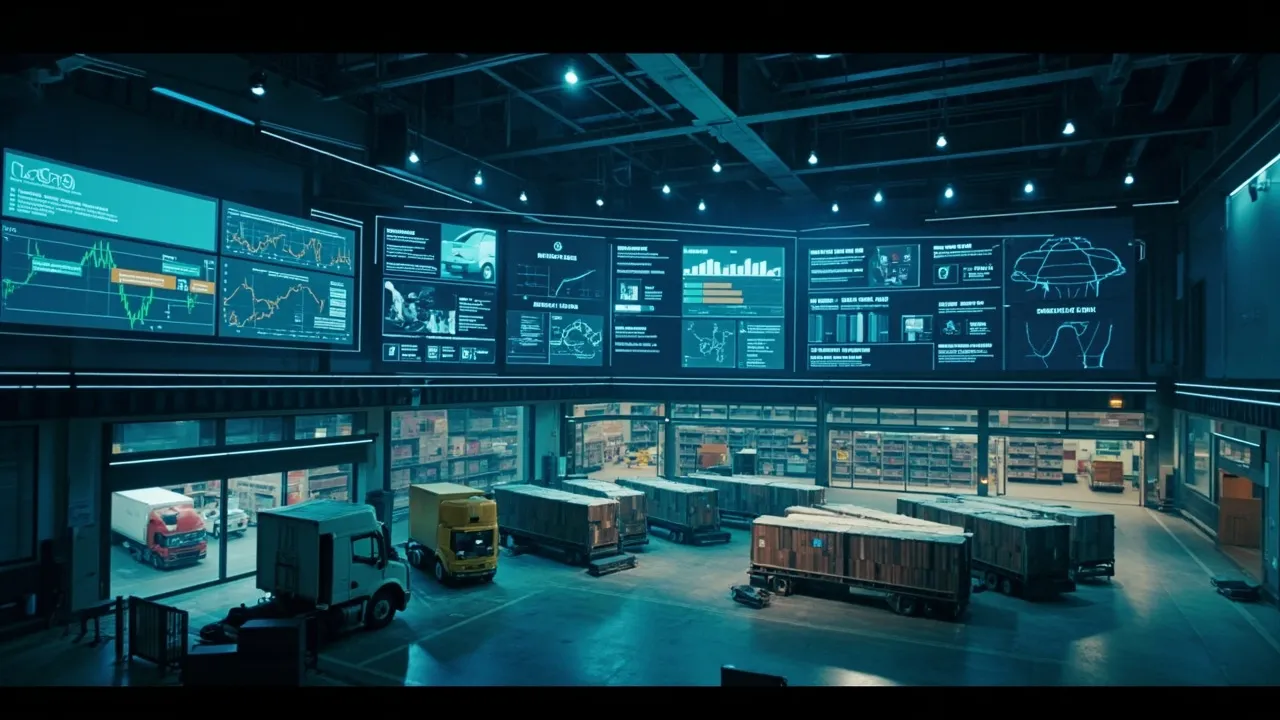
A late inbound trailer looks like a transportation problem until its effects spread. The warehouse holds a dock open, labor moves to another wave, a temperature-sensitive order loses shelf life, customer service protects a premium account, and procurement expedites replacement inventory. Each team makes a rational local decision. Together, those decisions can increase cost and delay recovery.
That is the practical limit of AI deployed one function at a time. A routing model minimizes miles. A warehouse model maximizes throughput. An inventory model protects availability. None necessarily knows which objective should yield when the same disruption touches all three.
The answer is not another prediction. It is a priority-conflict resolver: a governed decision layer that recognizes competing objectives, applies shared constraints and decision rights, and records why one recovery action outranked another.
Local optimization creates a network problem
Supply chains already generate plenty of signals. The harder problem is converting them into one coordinated response. McKinsey found that 67% of surveyed organizations had implemented digital dashboards for end-to-end supply chain visibility. Visibility is important, but a dashboard showing five red alerts does not decide which one gets scarce capacity.
Autonomous planning remains much less common. In separate research, McKinsey reported that only 7% of the consumer-goods companies in its sample had begun adopting autonomous end-to-end planning. The gap between dashboards and coordinated decisions is where functional conflicts live.
Consider a delayed refrigerated load with three customer orders. Transportation wants to consolidate the recovery move to control cost. The warehouse wants a fixed arrival time to protect labor productivity. Sales wants the largest customer served first. Quality wants the shortest remaining shelf-life product moved first. Compliance may prohibit a proposed cross-dock because temperature records or handling credentials are incomplete.
An AI agent trained only on freight cost can recommend the cheapest wrong answer. One trained on service can create an expensive cascade elsewhere. Orchestration must evaluate the whole decision, not average incompatible scores.
Build one shared event before choosing an action
Conflict resolution begins with a common event model. Every affected system should refer to the same disruption ID, shipment, orders, inventory lots, facilities, customers, resources, and time window. Without that shared identity, several agents may “solve” different versions of the same event.
The event should contain both facts and confidence levels: revised arrival estimate, remaining shelf life, dock and labor capacity, carrier options, appointment penalties, customer commitments, regulatory conditions, and cost exposure. It should also record the source and timestamp for every material input. An ETA inferred from stale location data should not carry the same authority as a confirmed carrier update.
Food Logistics recommends measuring disruption-to-detection time, detection-to-resolution time, staging dwell, missed loading windows, and orders affected by one delay. Those measures are valuable because they describe the cascade, not merely the first late milestone.
The shared event then needs explicit decision rights. Transportation may select a carrier within an approved cost band. Quality must approve any shelf-life or temperature exception. Customer service may reallocate inventory within defined account rules. Compliance constraints cannot be overridden by an optimization score. When the proposed action crosses a threshold, the event routes to the authorized human instead of quietly choosing.
Rank constraints before the disruption occurs
A resolver needs a hierarchy that operations leaders agree on in advance. A workable order is:
- Safety and compliance: legal, temperature, hazmat, customs, and contractual prohibitions are hard constraints.
- Product integrity: remaining shelf life, damage risk, chain of custody, and handling requirements determine which options remain feasible.
- Service commitments: promised delivery windows, critical-customer rules, production-stoppage risk, and documented priority tiers shape allocation.
- Capacity feasibility: equipment, driver hours, dock slots, labor, storage, and carrier acceptance determine whether an action can actually execute.
- Total recovery cost: freight, labor, penalties, spoilage, inventory, and downstream handling are compared only after higher-order constraints are met.
This is not a permanent ranking for every shipment. Policies can vary by commodity, customer, lane, and disruption type. The important point is that the priority and override authority are explicit.
For example, the normal rule may favor first-expiring-first-out inventory. A documented customer-criticality rule could override it when an automotive plant faces a line stop, but only if quality confirms that the reassigned product remains viable and the displaced order receives a feasible recovery plan. The system should display the losers as well as the winner. A recommendation that saves one order while making four others late is not complete.
Make recommendations explainable and executable
For every candidate action, the resolver should show the constraints tested, priorities applied, expected outcome, confidence, and rejected alternatives. A useful explanation is operational: “Use carrier B at a $1,850 premium because it preserves two temperature-qualified deliveries and avoids a projected $14,000 spoilage exposure.” “Carrier B scored 0.87” is not.
Recommendations also need execution checks. Confirm that the carrier accepted, the dock slot changed, the warehouse wave updated, customer notifications went out, and dependent orders were replanned. If one confirmation fails, reopen the event rather than marking it resolved.
Human intervention should be structured. Require a reason code when a planner rejects or modifies a recommendation, then compare the override with the result. This creates training data without pretending every historical decision was correct.
Audit the recovery, not just model accuracy
Prediction accuracy matters, but orchestration succeeds or fails in operations. Score each resolved event against:
- disruption-to-detection and detection-to-decision time;
- time until all dependent systems acknowledged the action;
- actual versus predicted recovery time and total cost;
- downstream exceptions created or prevented;
- orders, lots, appointments, and customers affected;
- manual touches, overrides, and escalations; and
- repeat conflicts caused by missing data or unclear authority.
Inbound Logistics identifies data quality (38%), lack of skills (30%), and unclear ROI (29%) among barriers cited by CEOs scaling supply-chain AI. A resolver addresses the governance side of those barriers by exposing the data used, the people authorized to intervene, and the value of each decision in measurable recovery outcomes.
AI supply chain orchestration becomes useful when it can make tradeoffs without hiding them. CXTMS brings shipment events, orders, capacity, documents, and exception workflows into a shared operating record so teams can coordinate recovery decisions across transportation and logistics. Request a CXTMS demo to see how governed exception management can turn competing priorities into faster, auditable action.