Connected Manufacturing Still Lacks Real-Time Visibility—Fix the Five Data Handoffs First

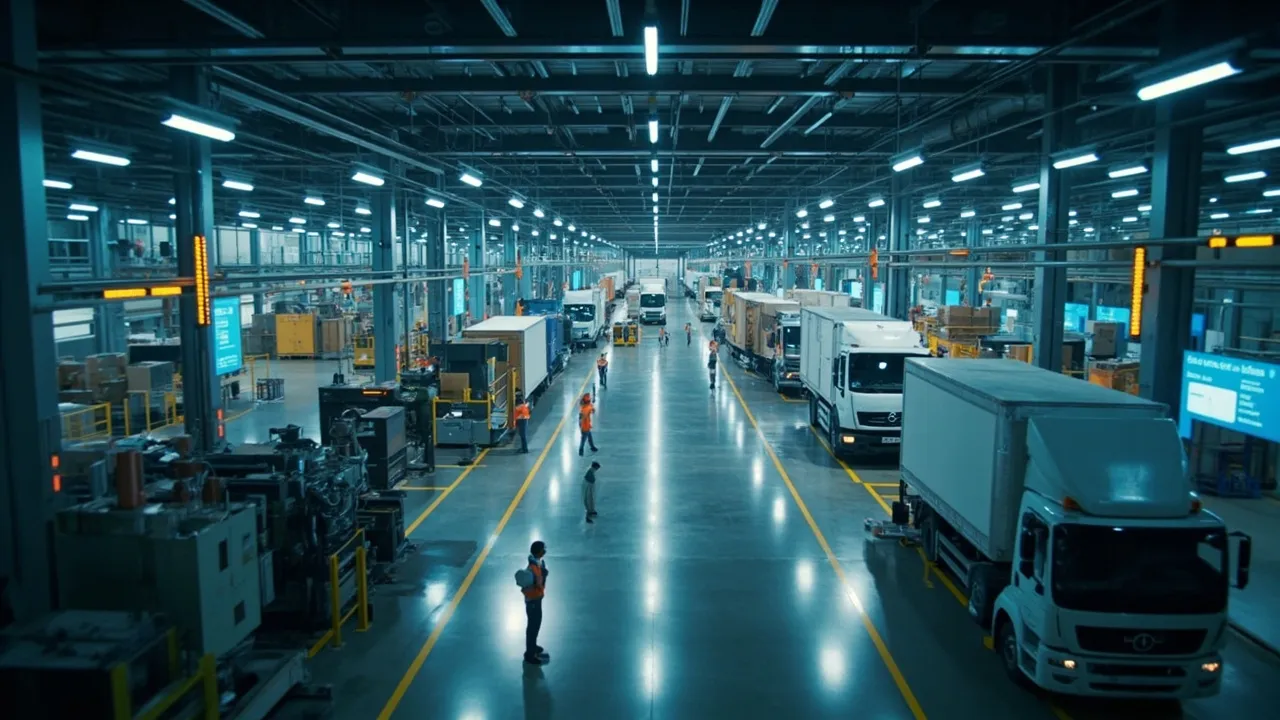
Connected manufacturing promises one live operational picture spanning machines, workers, production systems, inventory, and transportation. Most factories still do not have it.
SupplyChainBrain reports that only 16% of manufacturing leaders globally have real-time work-in-progress monitoring across the entire manufacturing process. The problem is rarely a total absence of technology. Plants already produce data through ERP, manufacturing execution systems, warehouse software, scanners, programmable logic controllers, sensors, and mobile devices. The harder problem is preserving meaning when work moves between them.
Before funding another control tower, manufacturers should audit five data handoffs: identity, timestamp, status, ownership, and exception semantics. If any one breaks, a dashboard may look current while the decision behind it is already wrong.
1. Preserve identity across every system
A production order, batch, pallet, license plate, shipment, and customer order may describe the same physical flow, but they rarely share one identifier. When the MES reports an order complete and the WMS reports a pallet staged, the transportation team must be able to prove that both events refer to the freight on a specific load.
Create a cross-reference that persists from raw material or work order through finished goods and shipment. Each handoff should include the source-system ID, shared business ID, unit of measure, quantity, and parent-child relationship. Do not depend on a description such as “finished product” or a manually typed purchase-order number.
Identity quality should be measured. Track unmatched events, duplicate IDs, relabeled units, and records joined through manual intervention. If the integration cannot reconcile an event automatically, route it to an owner instead of silently dropping it.
2. Make timestamps comparable
“Real time” is meaningless when systems disagree about clocks. A machine may record local time, an integration layer may use UTC, and a warehouse scanner may queue events during a network outage. The receiving application then treats arrival time as event time and creates a false sequence.
Every event needs at least two timestamps: when the activity occurred and when the receiving system accepted it. Include time zone, clock source, and correction rules. This reveals both operational duration and data latency.
Measure the gap explicitly. A production completion posted 20 minutes late is not the same as production taking 20 minutes longer. The first is an integration problem; the second is an operational problem. Mixing them sends recovery teams to the wrong place.
3. Standardize status definitions
Terms such as “complete,” “available,” “released,” and “ready to ship” sound precise until two departments define them differently. Production may mark an order complete when the final machine cycle ends. Quality may still require inspection. The warehouse may not have packed or labeled the freight. Transportation may nevertheless tender a truck against a misleading ready time.
Build a small event dictionary with entry and exit criteria for every status. “Ready to ship,” for example, might require production completion, quality release, packaging confirmation, final quantity, shipping documents, dock assignment, and absence of holds. Store the contributing events rather than replacing them with one opaque flag.
This discipline matters as factories add AI. Inbound Logistics identifies poor or outdated data, disconnected systems, cross-functional gaps, and unclear accountability among the barriers to deploying AI in supply chains. A model cannot repair a status whose business meaning was never agreed.
4. Assign ownership at the handoff
Visibility without accountability produces better-looking queues. Every exception should identify who owns the next action, when that action is due, and who takes over if the threshold expires.
At the production-to-warehouse boundary, ownership might transfer only after quantity and quality release match. At the warehouse-to-transportation boundary, it may transfer after packaging, labels, documents, and dock readiness are confirmed. Write these rules into the workflow rather than leaving coordinators to negotiate responsibility during each disruption.
Returnable assets show the cost of vague ownership. SupplyChainBrain cites an estimate that approximately 15% of returnable transport items go missing each year. A location ping helps, but recovery also requires a custodian, expected return event, due date, and escalation path.
5. Normalize exception semantics
One system's warning may be another system's failure. A temperature sensor can report a threshold approach, a machine can report downtime, and a warehouse can report a short pick. Unless severity and business impact are normalized, teams receive either alarm fatigue or dangerously quiet dashboards.
Define each exception by object, condition, severity, probable impact, owner, response deadline, and closure evidence. Keep the raw source code for auditability, but map it to a common operational category. A late production order that threatens a carrier cutoff should become a shipment-risk event, not remain buried as a factory alert.
Separate dashboard latency from decision latency
Manufacturers often measure whether an event appeared quickly but not whether anyone acted quickly. Those are different service levels.
Dashboard latency runs from physical event to visible record. Decision latency runs from visible exception to an approved response. Recovery latency runs from approval to restored flow. Set thresholds for all three. A five-second feed offers little value if an exception waits 90 minutes for ownership.
Track percentiles rather than averages. Averages hide the long-tail failures that miss carrier cutoffs and customer appointments. Review latency by plant, event type, system, shift, and integration path so remediation targets the actual weak handoff.
Give transportation a trustworthy ready-to-ship event
CXTMS should consume a qualified logistics event, not every raw factory signal. The integration should validate identity, timestamps, status prerequisites, quantity, ownership, and holds before creating or updating the shipment. When a prerequisite changes, the shipment record should retain the revision and alert the responsible planner.
That approach does not pretend factory data is automatically clean. It creates a controlled boundary where production truth becomes transportation action. Carriers can be tendered against credible readiness, dock appointments can reflect current constraints, and customers can receive explanations tied to real events.
Connected manufacturing is not achieved by placing more data on one screen. It is achieved when every critical handoff preserves enough context for the next team and system to act correctly.
Ready to connect production milestones with transportation execution? Request a CXTMS demo to build trustworthy ready-to-ship events, exception workflows, and shipment visibility in one platform.