RAG and Vector Databases Can Make Dutch Port Logistics AI Auditable

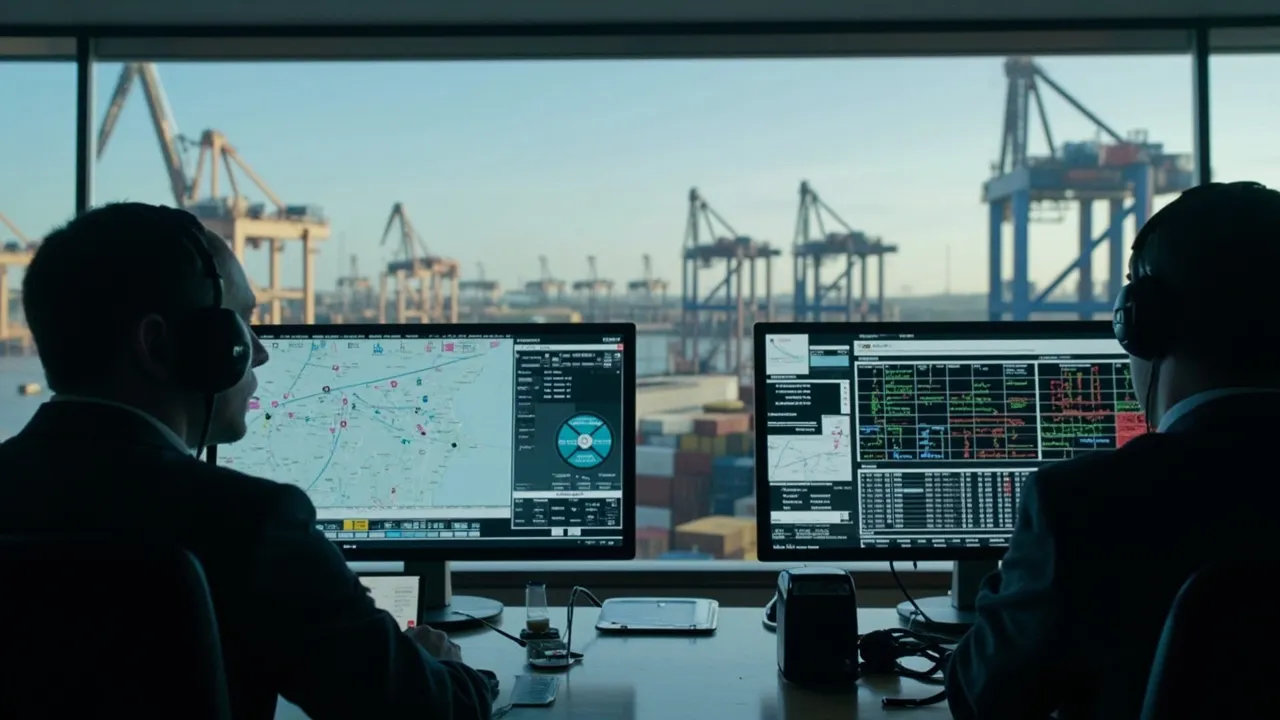
An AI assistant can summarize a port exception in seconds. The harder question is whether a planner can prove where its answer came from before a container is released, a customs deadline is missed, or a carrier is instructed to act.
That distinction matters in Dutch port logistics. A single movement can involve booking confirmations, bills of lading, customs messages, terminal status updates, dangerous-goods instructions, emails, and operating procedures. The records may use Dutch and English, arrive at different times, and change while the shipment is moving. A generic chatbot can produce a fluent answer from that complexity. It cannot, by itself, make the answer operationally trustworthy.
Retrieval-augmented generation, or RAG, offers a better pattern. It lets an AI model retrieve relevant records from an approved business knowledge base before composing a response. Combined with a vector database and strict TMS controls, RAG can turn an opaque answer into a recommendation backed by shipment evidence.
RAG is evidence retrieval before answer generation
A vector database stores mathematical representations of text and other records. Those representations allow a system to find material by meaning rather than exact wording. A query about a container held for a documentation discrepancy could retrieve a terminal message saying “blocked,” a Dutch-language customs notice, an internal procedure for document holds, and the shipment's latest status—even when none uses the same phrase.
The language model then uses that retrieved material to draft an answer. In a port workflow, it might explain why a container cannot be released, identify the missing evidence, and propose the next task. The useful output is not merely the paragraph it generates. It is the paragraph plus links to the records that support every consequential statement.
This architecture fits the industry's push toward faster action. SupplyChainBrain reports that supply-chain decisions increasingly need to be made in real time, while fragmented systems remain a barrier between visibility and execution. RAG can bridge that gap only when retrieval reaches the authoritative operational record rather than an uncontrolled collection of files.
Dutch port workflows need context that changes by the minute
Port data has a short shelf life. An arrival estimate retrieved at 09:00 may be superseded at 09:12. A release instruction may apply to one container but not another on the same bill of lading. A dangerous-goods rule may depend on commodity, packaging, terminal, mode, and the version in force on the movement date.
That makes timestamps and scope as important as semantic similarity. Each retrieved item should carry its source system, shipment or equipment identifier, effective time, ingestion time, version, language, and owner. The retrieval layer should prioritize current, shipment-specific evidence over a broadly similar historical document.
Multilingual retrieval can still be valuable. A planner can ask a question in English and find a relevant Dutch procedure, or ask in Dutch and retrieve an English carrier message. But the system should display the original passage alongside any translation. Otherwise, a plausible translation can hide a qualifier that changes the operational decision.
Retrieval reduces hallucination risk; it does not eliminate it
RAG can ground an answer, but a model can still misread a source, combine incompatible records, or state a conclusion more confidently than the evidence allows. Retrieval quality also fails when documents are stale, poorly tagged, duplicated, or inaccessible to the index.
The governance problem is therefore larger than model selection. SupplyChainBrain's analysis of getting AI right argues that the gap between AI experiments and business value is shaped by use-case selection, workflow design, governance, adoption, and accountability. Those are precisely the controls required in port operations.
An auditable implementation should require:
- sentence-level citations that open the exact source passage;
- visible document timestamps and warnings for superseded records;
- access controls inherited from the TMS and document repository;
- a clear “insufficient evidence” response when retrieval is weak or conflicting;
- logs of the question, retrieved records, model version, answer, user, and subsequent action;
- human approval before customs filing, cargo release, route change, or financial commitment.
Permissions must apply during retrieval, not after the answer is generated. If a user cannot view a commercial rate, personal record, or restricted customs document, the AI must not retrieve it or leak its substance through a summary.
Build the audit trail around the shipment record
In CXTMS, the shipment should remain the system of action. Documents, events, messages, parties, equipment, holds, and tasks are linked to that record. The vector database acts as a search layer over permitted evidence; it is not a replacement system of record.
When a planner asks, “Can container ABC be released?”, CXTMS can assemble the current shipment context, retrieve the most relevant evidence, and return a structured recommendation. Each cited claim links to the underlying document or event. If the evidence shows an active customs hold, the interface prevents release regardless of how the model phrases its answer. The planner can accept a proposed follow-up task, reject it, or escalate the conflict, and that decision becomes part of the audit history.
This design separates three things that are too often blurred together: what the sources say, what the AI infers, and what the business permits. Deterministic rules still enforce hard gates. AI helps interpret unstructured evidence and propose the next step. Humans retain authority over high-impact exceptions.
Auditable AI can improve both speed and sustainability
The operational case extends beyond document handling. Reuters reports that freight logistics represents an estimated 7% to 8% of global greenhouse-gas emissions and that AI tools could reduce the sector's carbon footprint by 10% to 15%, primarily through better daily operating decisions. The same Reuters analysis also emphasizes that fragmented data and organizational readiness constrain the opportunity.
Avoided waiting, unnecessary repositioning, and preventable truck trips begin with dependable decisions. In a Dutch port environment, an evidence-backed AI recommendation can help a team act earlier without asking it to trust an unexplained black box.
RAG is therefore not a shortcut around logistics governance. Properly implemented, it is a way to make governance visible at the moment of action: the source, its age, its permissions, the model's inference, the applicable rule, and the person who approved the outcome.
Want to connect AI recommendations to shipment evidence without surrendering operational control? Request a CXTMS demo to see how auditable workflows can support faster port-logistics decisions.