GM's Battery Rightsizing and Memory Sourcing Need One Constraint-Aware Inbound Plan

An EV battery pack and a memory chip can both stop an assembly line, but they should never be managed as though they create the same logistics problem. One consumes enormous manufacturing, storage, and transport capacity. The other is compact, high-value, difficult to substitute, and exposed to competition from data centers and artificial intelligence. General Motors' latest supply-chain moves bring those two constraint types into the same operating plan.
Supply Chain Dive reports that GM expects to spend $9 billion on U.S. manufacturing in 2026 and is preparing another $1 billion to $1.5 billion for onshore production in 2027. The investments are expected to lift U.S. production capacity to 2 million vehicles. At the same time, the automaker is rightsizing battery sourcing and securing long-term access to automotive memory.
That combination is more than a procurement story. It changes origins, lanes, handling requirements, inventory targets, and production-release rules. The inbound plan has to translate each sourcing decision into executable transportation controls.
Battery rightsizing is a network-capacity problem
Battery supply is physically demanding. Cells, modules, and packs are heavy, regulated, costly to store, and usually tied closely to a specific vehicle platform. A production adjustment can leave an automaker with too much dedicated capacity in one location and too little qualified supply in another. It can also create expensive underused contracts, packaging pools, or specialized transport assets.
GM's battery strategy shows why capacity must be aligned with a changing product mix. Reuters reported in March that GM and LG Energy Solution were retooling their Tennessee joint-venture battery plant to make batteries for energy storage systems. That followed weaker EV demand and layoffs at the facility. Reassigning capacity can improve asset utilization, but it changes the inbound and outbound network around the plant.
For logistics teams, battery rightsizing should trigger a structured review of:
- forecast volume by chemistry, cell format, vehicle platform, and assembly plant;
- qualified origin-to-plant lanes and alternate sources;
- dangerous-goods classifications, carrier approvals, and emergency-response data;
- reusable packaging quantity, cycle time, repair availability, and return routing;
- minimum inventory against line-side space and degradation limits;
- exposure to expedited truckload or airfreight when launch schedules move.
These variables move together. A closer source may reduce ocean lead time while increasing dependence on one domestic facility. A chemistry change may lower cell cost but invalidate containers, handling instructions, or line-side presentation. Purchasing savings are not real until the new flow can reach production safely and consistently.
Memory sourcing is a scarcity and allocation problem
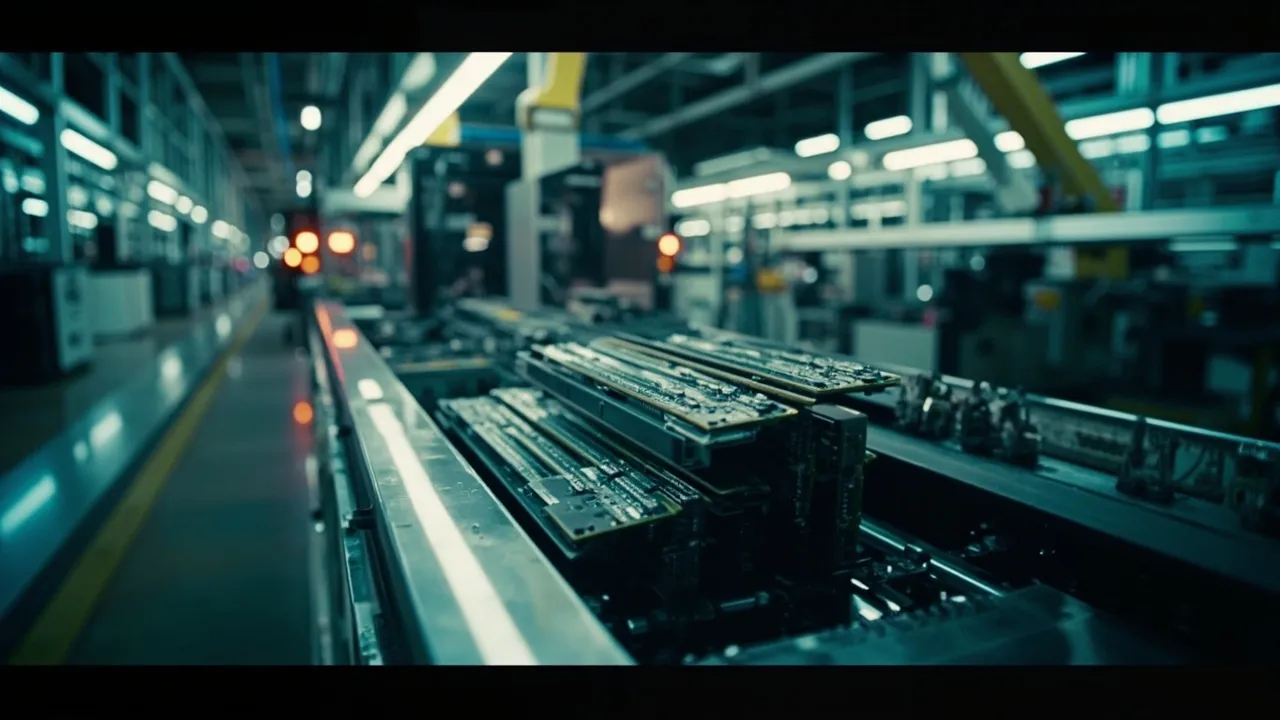
Memory components create almost the opposite freight profile. Their physical volume is small, so transportation capacity is rarely the central constraint. Availability, qualification, allocation, obsolescence, and authentication matter more.
GM's expanded agreement with Micron covers low-power double-data-rate memory, NOR flash, and universal flash storage NAND. Those parts support increasingly software-defined vehicles. GM's next-generation computing architecture, scheduled for 2028, is expected to deliver up to 35 times the AI performance of previous platforms, according to the same report.
Automotive buyers must also compete with faster-growing AI and data-center demand. Unlike battery capacity, a short memory allocation may be technically easy to ship but impossible to replace quickly. An alternate supplier's device may require engineering validation, software changes, regulatory evidence, or production-part approval before it can enter a vehicle.
The appropriate policy therefore emphasizes confirmed allocation, supplier commits, lot traceability, secure custody, and time-to-qualify an alternative. Small buffers can be economical because the components occupy little space, but inventory should still be managed by product generation and end-of-life risk. Buying excess stock without a technology roadmap can exchange shortage exposure for obsolescence.
Supplier-country changes must reach execution
Onshoring is not complete when a sourcing contract is signed. The supplier master, lane guide, packaging specification, customs profile, routing rule, and production calendar must all reflect the new country and facility.
Consider GM's plan to shift Buick Envision production from China to the United States beginning in 2028. A country change can shorten one international flow while creating new domestic component moves. It may change supplier cutoffs, consolidation points, border requirements, tariff exposure, and the amount of inventory needed between release and assembly.
A constraint-aware workflow should prevent a purchase order or shipment release from using a legacy origin by default. It should also model the transition period, when old and new sources may operate simultaneously. Dual-running demands explicit allocation rules; otherwise, planners can over-order from both sources or discover too late that one lane lacks packaging, carrier capacity, or receiving appointments.
Build one inbound scorecard with distinct constraint logic
CXTMS can give procurement, manufacturing, and logistics teams a shared scorecard without pretending every constraint is interchangeable. Each constrained part or material should carry at least these fields:
- Constraint severity: production hours or vehicle units at risk if supply misses its date;
- Time to recover: supplier production lead time plus validation, transit, and receiving time;
- Substitution difficulty: approved alternatives and the steps required to activate them;
- Inventory coverage: usable supply by plant, platform, and production day;
- Lane readiness: approved carriers, packaging, compliance data, and alternate routes;
- Premium-freight exposure: expected expedite cost and the amount already incurred;
- Commit reliability: requested, promised, shipped, and received quantities by supplier.
The weighting should vary. Batteries deserve more emphasis on physical capacity, packaging cycles, hazardous-material compliance, and lane feasibility. Memory deserves more emphasis on allocation, qualification, traceability, and technology lifecycle. Both should roll up to the same question: how many units of production are exposed, for how long, and what recovery action is genuinely executable?
GM's strategy is a useful reminder that resilience is not simply domestic sourcing or larger inventories. It is the ability to connect commercial decisions with the operational rules that move each constrained input to the line. When those rules live in one transportation platform, teams can compare recovery options using production impact and total landed risk—not just a supplier's quoted price.
Ready to turn sourcing changes into executable inbound plans? Request a CXTMS demo and see how constraint-aware workflows can connect suppliers, lanes, inventory signals, and production milestones.